AI Voice Chatbots are transforming the way businesses interact with customers. Combining advanced AI voice recognition chatbots technologies with artificial intelligence, these tools are enabling more personalized, efficient, and seamless communication. In this blog, we explore how AI Chatbots with Voice Recognition work, their benefits, and why AI-Powered Voice Chatbots are becoming essential for businesses across industries.
The adoption of AI Voice Bots is rapidly increasing. In 2024, over 8.4 million businesses are utilizing Voicebot AI Chatbots, reflecting a year-over-year growth rate of 2.9% (Tidio). Moreover, nearly 80% of decision-makers have experimented with generative AI technologies, including Conversational AI Voice Chatbots, with over 20% incorporating them regularly into their operations (Vention).
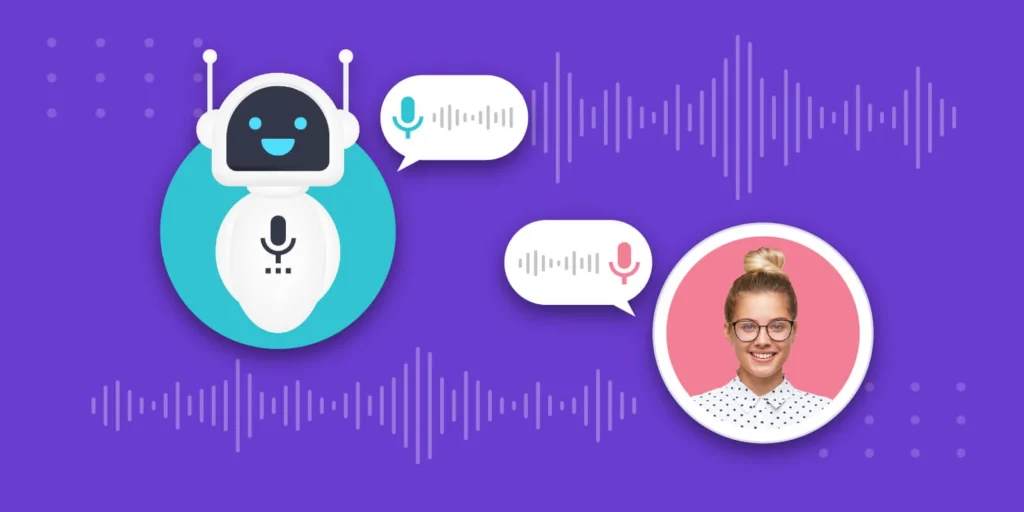
Tired of clunky phone trees and slow responses? AI voice-enabled chatbots bring real-time, human-like conversations to your customer support – 24/7, across channels.
This blog explores their top benefits, practical use cases, and how they’re reshaping CX with speed, personalization, and automation.
Want to elevate customer service without scaling your team? Read the full post to discover how Wizr makes voice AI work for the enterprise.
What Are AI Voice Chatbots?
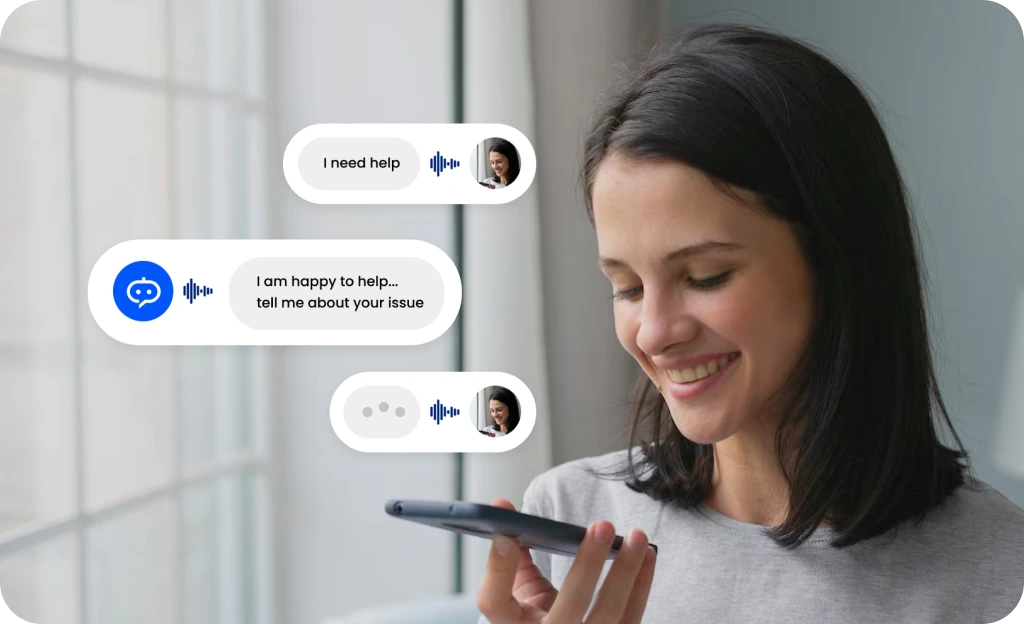
AI voice chatbots are intelligent systems that interact with users through spoken language, combining natural language processing and voice recognition to deliver real-time, human-like conversations. These bots go beyond basic voice assistants, enabling more complex tasks like troubleshooting, support, and transactions.
AI Voice Bots are software programs that use artificial intelligence to interact with users via voice commands. Unlike traditional chatbots that rely solely on text input, Voice-Based Conversational AI Chatbots are capable of understanding spoken language and responding in kind.
These systems integrate natural language processing (NLP) and AI Voice Recognition Chatbots to interpret user queries and deliver contextually relevant responses. Unlike simple voice assistants like Siri or Alexa, AI Chatbot Voice Assistants are designed for more complex interactions, including real-time problem-solving and deep customer engagement. Businesses investing in enterprise AI solutions are increasingly deploying AI voice chatbots to improve customer support, automate conversations, and enhance operational efficiency.
Adoption of voice AI is accelerating, with the global market for voice assistants projected to reach $30 billion by 2026, according to Statista. In customer service, businesses using voice AI have reported a 35% reduction in call center workload and faster resolution times. Industries such as retail, healthcare, and finance are using AI voice chatbots for personalized, scalable, and 24/7 support experiences.

Moreover, Voice Assistant AI Chatbots are versatile tools that can be tailored for specific use cases, such as handling customer complaints, providing product support, or even serving as virtual shopping assistants. They are increasingly being adopted in industries ranging from healthcare and retail to banking and education, making them indispensable for modern businesses.
How Do AI Voice Chatbots Work?
AI voice-enabled chatbots function through a combination of several key technologies:
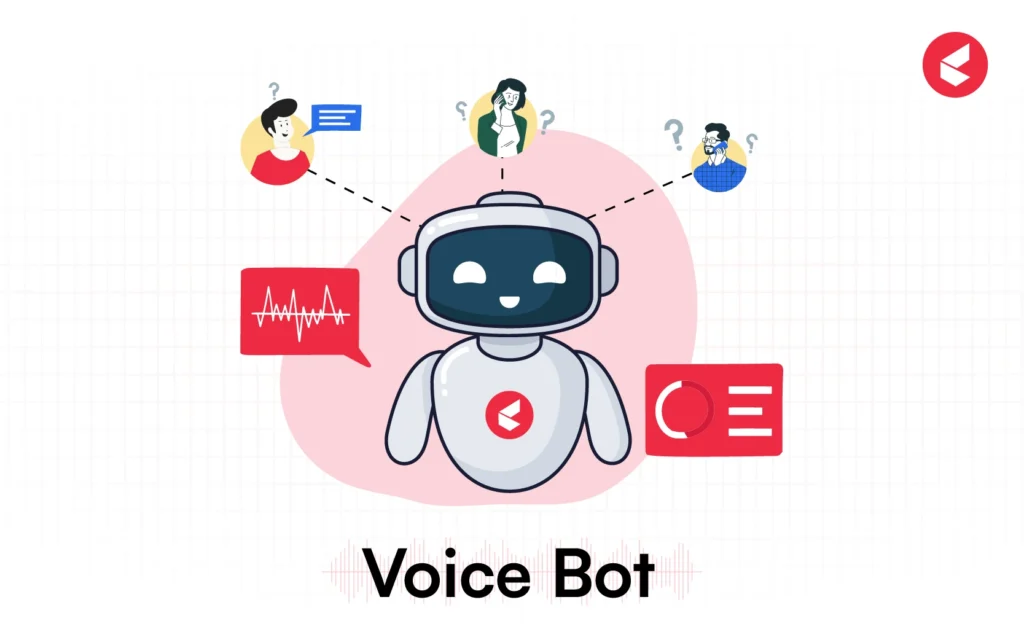
- Voice Recognition: This process involves capturing audio input and converting it into text that can be understood by the system. Advanced AI Chatbots with Voice Recognition utilize speech analytics tools for call centers to differentiate accents, dialects, and speech patterns, ensuring greater accuracy.
- Natural Language Processing (NLP): Once the text is generated, Voice-Based Conversational AI Chatbots use NLP algorithms to interpret the content, identifying the user’s intent, emotions, and context. This is essential for ensuring that interactions with Conversational AI and NLP chatbots for enterprises are both natural and contextually appropriate.
- AI Algorithms: AI systems analyze the interpreted input and generate responses tailored to the user’s needs. These responses are personalized based on previous interactions, customer data, or specific queries, making AI-Powered Voice Chatbots efficient tools for real-time problem-solving.
- Text-to-Speech (TTS): The final step involves converting the chatbot’s response back into spoken language. Modern AI Voice Recognition Chatbots use advanced synthesis techniques to make responses sound human-like, avoiding robotic or monotonous tones.
Example: AI Voice-Enabled Bots in Customer Service
For instance, if a customer contacts a Voice Assistant AI Chatbot to inquire about their bank account balance, the system will:
- Convert their voice query into text using AI Voice-Based Chatbots.
- Identify the intent (e.g., checking account balance) through Conversational AI Voice Assistant Chatbots.
- Retrieve the relevant data securely.
- Convert the response (e.g., “Your balance is $5,000.”) into speech and relay it back to the user via the Voice Chat AI Chatbot.
This seamless process ensures a smooth and efficient customer experience, making AI Chatbot Voice Assistants an indispensable tool for modern businesses.
Key Benefits of AI Voice-Enabled Chatbots for Customer Support
AI Voice Chatbots provide significant advantages for customer support, enhancing efficiency, accessibility, and user satisfaction. Below are the key benefits of using AI-Powered Voice Chatbots and Voice AI Chatbots in customer service:
- 24/7 Availability: AI Chatbots and Voicebots offer round-the-clock assistance, ensuring customers receive help whenever they need it, even outside of regular business hours. This feature makes Voice-Enabled AI Chatbots an essential tool for modern businesses.
- Faster Response Times: AI Voice Recognition Chatbots address queries instantly, reducing customer wait times and improving satisfaction. Unlike human agents, Voicebot AI Chatbots can manage multiple interactions simultaneously without delays. According to Scoop, AI Voice-Based Chatbots have been reported to boost sales by an average of 67%.
- Personalized Interactions: Using data insights, Conversational AI Voice Assistant Chatbots deliver tailored solutions based on customer history and preferences. For instance, a Voice Chat AI Chatbot can recommend products similar to past purchases or provide updates on previous queries, making customer experiences more engaging.
- Cost Efficiency: By reducing reliance on human agents, AI Chatbot Voice Assistants help minimize operational costs. Businesses can scale customer support effectively with Voice AI Chatbots, without significantly increasing their workforce.
- Enhanced Accessibility: AI Chatbots with Voice make interactions more accessible for users with disabilities or those who prefer verbal communication over typing. These AI Chatbots with Voice Recognition can also support diverse languages and accents, simplifying interactions for a broader customer base.
- Consistency in Service: Unlike human agents, Conversational Voice AI ensures consistent service quality across all interactions, maintaining a standardized and professional customer experience.
According to Zendesk, almost half of customers believe that AI Chatbots and Voicebots can be empathetic when addressing their concerns, reflecting the growing trust in AI-Driven Voice Assistant Chatbots for customer service.
Real-World Use Cases of AI Voice Chatbots Across Industries
AI voice chatbots are being adopted across various industries to enhance customer experiences and streamline operations. Examples include:
- Healthcare:
- Scheduling appointments without the need for human intervention.
- Providing medication reminders to patients through AI Voice Bots.
- Offering preliminary assessments by asking basic health-related questions and directing patients to the appropriate healthcare services using Conversational AI Voice Chatbots.
- E-commerce:
- Assisting with product recommendations based on browsing or purchase history through Voice AI Chatbots.
- Handling order tracking queries and providing real-time shipping updates with Voice-Enabled AI Chatbots.
- Resolving complaints by offering quick solutions, such as initiating returns or refunds with AI Voice Chatbots.
- Banking:
- Managing account queries such as balance checks or transaction histories through AI Chatbots with Voice Recognition.
- Sending fraud detection alerts and guiding users through secure verification processes with Voice Bot AI Chatbots.
- Offering financial advice, such as suggesting savings plans or investment options with AI Voice-Based Chatbots.
- Travel and Hospitality:
- Facilitating flight and hotel bookings by offering voice-guided navigation through available options with Voice Chat AI Chatbots.
- Providing personalized travel recommendations based on user preferences through Conversational Voice AI.
- Delivering real-time updates on flight schedules, delays, or changes in itineraries using Voice Assistant AI Chatbots.
- Education:
- Assisting students with enrollment processes and class schedules using AI Chatbot Voice Assistants.
- Answering frequently asked questions about courses, fees, or campus activities with AI Voice Bots Chatbots.
- Supporting remote learning through interactive voice-based quizzes and study aids with AI Voice Recognition Chatbots.
These use cases highlight the versatility of AI Voice Chatbots, proving their ability to adapt to diverse business needs and deliver measurable value.
How Conversational AI Voice Chatbots Improve Customer Support Efficiency
Conversational AI Voice Chatbots streamline customer support operations by:
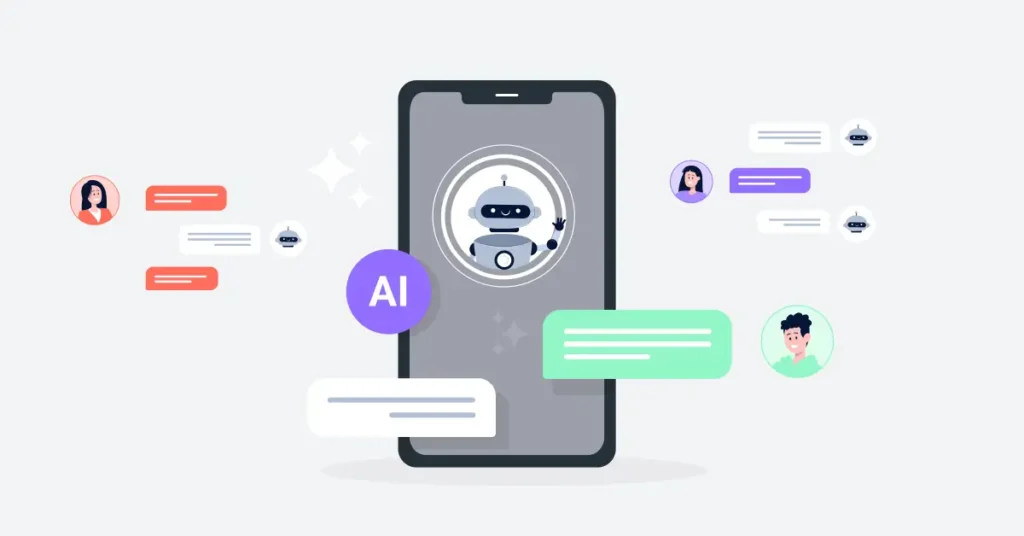
Enhanced Multitasking
One key advantage of AI Voice Chatbots is their ability to handle multiple interactions simultaneously. Unlike human agents, they don’t tire or lose focus, ensuring consistent service quality.
Real-Time Data Insights
Voice AI Chatbots collect and analyze customer data during interactions, offering valuable insights that businesses can use to improve their services. For instance, trends in customer queries can inform product development or marketing strategies.
Automation of Repetitive Tasks
AI-Powered Voice Chatbots excel at automating repetitive processes such as answering FAQs, scheduling appointments, or processing basic requests. This allows human agents to focus on more complex, high-value tasks.
Scalability During Peak Times
Unlike traditional support systems, AI Chatbots with Voice can handle large volumes of customer queries without compromising on response times or quality. This scalability is crucial during busy periods like holidays or major events.
Seamless Integration with CRM Systems
Conversational Voice AI chatbots can integrate with existing CRM systems to access and update customer information in real-time. This ensures interactions are contextual and personalized, improving overall customer satisfaction. To dive deeper into how Chatbots vs. Conversational AI enhances customer experiences and boosts enterprise performance, explore the full comparison.
Challenges in Implementing AI Voice Chatbots for Customer Service
Despite their benefits, implementing AI Voice Bots in customer service comes with challenges, including:
- Integration Complexities: Ensuring seamless integration with existing systems and CRMs can be technically demanding and time-consuming.
- High Initial Costs: Setting up AI Voice Bots in Customer Service requires significant investment in software, hardware, and skilled personnel for development and maintenance.
- Training and Accuracy: Conversational AI Voice Chatbots need to be trained extensively to understand diverse accents, languages, and industry-specific terminology. Poor training can lead to inaccurate responses, frustrating customers.
- Data Privacy Concerns: Managing and protecting customer data is critical to complying with regulations such as GDPR or CCPA. Ensuring robust security protocols adds complexity to the implementation.
- Customer Acceptance: Some customers may resist interacting with Voicebot AI Chatbots, preferring human interaction instead. Businesses must educate users on the benefits and capabilities of AI Chatbots with Voice to drive adoption.
- Maintenance and Updates: Regular updates and fine-tuning are required to keep AI Voice Chatbots effective, which can add to operational costs.
Emerging Trends in AI Voice Chatbots & Voice AI Technology
The future of AI Voice Chatbots is shaped by advancements in technology and evolving customer expectations. Key trends include:
- Multilingual Capabilities: Voice AI Chatbots are increasingly supporting multiple languages, enabling businesses to cater to a global audience and break down language barriers.
- Emotion Recognition: Emerging AI Voice Recognition Chatbots systems are gaining the ability to detect emotions in a user’s voice. This enables the chatbot to respond empathetically, improving the customer experience.
- Integration with IoT Devices: AI Chatbots with Voice are being integrated with smart home devices, wearables, and other IoT gadgets, offering users greater convenience and functionality.
- Proactive Assistance: Advanced Conversational Voice AI systems can predict customer needs based on past behavior or current context, offering solutions before the user even asks.
- Voice Biometrics for Security: Voice Recognition Chatbots are incorporating voice biometrics for authentication, enhancing security while maintaining a seamless user experience.
- Industry-Specific Customization: Businesses are increasingly demanding AI Voice-Based Chatbots tailored to their specific needs, such as healthcare-focused bots or retail-specific assistants.
Top 5 AI Voice Chatbots Transforming Customer Service
1. Google Assistant: A Leading AI Voice Chatbot Solution
Google Assistant, recognized for its advanced natural language understanding, is widely used for both personal and professional applications. It excels at integrating with smart home devices and providing seamless Voice-Enabled AI Chatbots solutions, revolutionizing AI Voice Bots in Customer Service.
2. Amazon Alexa: The Pioneer in AI Voice Bots
Amazon Alexa, a leader in AI-Powered Voice Chatbots, offers robust functionality for smart home automation and e-commerce. With its Skills platform, businesses can create customized AI Chatbots with Voice experiences for customers, enhancing customer support and engagement with Voice AI Chatbots.
3. IBM Watson Assistant: Advanced AI Voice Bots for Enterprise
IBM Watson Assistant is tailored for enterprise applications, merging advanced AI with Voice-Based Conversational AI Chatbots to provide secure and scalable customer support solutions. It’s highly popular in healthcare, finance, and retail as an AI Voice Chatbot that delivers efficiency and scalability.
4. Microsoft Cortana: Voice Chat AI Chatbots for Business Productivity
While primarily known for productivity tasks, Microsoft Cortana also supports Voice Bot AI Chatbots integrations for businesses. It helps with scheduling, answering customer inquiries, and more, leveraging Voice Assistant AI Chatbots to enhance service quality.
5. Nuance Nina: Personalized AI Voice Chatbots for Customer Engagement
Nuance Nina is designed for customer engagement, utilizing Conversational AI Voice Assistant Chatbots to deliver personalized voice interactions. It’s popular in industries like banking and telecommunications for creating Voicebot AI Chatbots that provide seamless customer service.
Conclusion
AI voice chatbots are more than just a technological trend; they are revolutionizing customer interactions and business operations. As companies strive to meet rising customer expectations, investing in AI voice technology is no longer optional but necessary for sustained success. Whether it’s through streamlining support processes, enhancing personalization, or improving accessibility, the impact of AI voice chatbots is undeniable.
To stay ahead in today’s competitive market, businesses must embrace these innovations and adapt to the changing landscape of customer service. AI voice chatbots are not just the future—they are the present, driving efficiency, satisfaction, and growth. Organizations adopting AI solutions for enterprise are increasingly leveraging AI voice technologies to automate support workflows and deliver more intelligent customer experiences.
FAQs
1. What Are AI Voice Chatbots and How Do They Work?
AI Voice-Enabled Chatbots are virtual assistants that let users interact through voice commands instead of typing. Using voice recognition and natural language processing, they understand spoken questions, process the intent, and respond instantly, much like talking to a human.
They work by:
- Capturing spoken input with a voice interface.
- Converting speech to text for AI processing.
- Generating accurate, conversational voice responses.
Wizr AI’s voice-enabled chatbot solutions combine AI agents, enterprise knowledge integration, and agentic workflows, allowing enterprises to automate complex support tasks and deliver seamless, human-like conversations.
2. How Can AI Voice Bots Improve Customer Service?
AI voice bots improve customer service by providing instant, hands-free support and handling high volumes of calAI voice bots improve customer service by providing instant, hands-free support and handling high volumes of calls without wait times. They can answer FAQs, process service requests, and escalate complex cases to human agents 24/7.
Key advantages:
- Faster response times.
- Consistent and accurate information.
- Better scalability during peak demand.
Wizr AI’s CX AutoSolve AI and CX Agent Assist AI integrate conversational AI capabilities with intelligent workflows, enabling enterprises to boost efficiency while maintaining personalized service.
3. What Are the Key Benefits of AI Chatbots with Voice Recognition?
AI chatbots with voice recognition offer:
- Multilingual support to serve global audiences.
- Accent and dialect adaptability for better accessibility.
- Automation of repetitive tasks, reducing agent workload.
- Personalized voice responses for improved customer satisfaction.
Wizr AI’s AI agents enhance operational efficiency by combining conversational AI with enterprise data and knowledge systems, ensuring accurate, context-driven responses in real time.
4. Can AI Voice Chatbots Handle Multiple Languages?
Yes. Modern AI voice chatbots can understand and respond in multiple languages, using advanced speech-to-text and natural language models. This enables businesses to reach wider audiences and remove language barriers in customer service.
Wizr AI supports multilingual interactions across its AI agents and CX solutions, helping enterprises deliver consistent, high-quality service across regions.
5. How do AI voice bots create personalized customer experiences?
AI voice bots personalize customer interactions by analyzing past conversations, preferences, and behaviors to tailor responses. They can greet customers by name, remember order histories, and suggest relevant solutions—making the experience feel human and connected.
With Wizr AI’s intelligent AI agents, enterprises can combine real-time interaction analysis with enterprise data and governance, creating highly customized, frictionless support journeys.
6. Can AI voice bots manage after-hours calls or project updates for homeowners?
Yes. AI voice bots can manage after-hours customer calls, schedule appointments, and provide real-time updates ideal for industries like services, real estate, or field operations. They ensure customers stay informed even when live agents aren’t available.
Wizr AI enables enterprises to design and deploy agentic workflows that automate updates, confirm actions, and log customer requests, reducing manual effort and missed opportunities.
7. What is voice and chatbot integration, and why is it important?
Voice and chatbot integration combines speech capabilities with AI-driven text processing to deliver more natural, multi-channel customer support. It lets customers switch between voice interaction and chat messaging without losing conversation context.
Wizr AI’s Enterprise AI Services, combined with AI agents and agentic workflows, enable seamless omnichannel experiences by orchestrating AI agents and workflows across interaction channels, ensuring consistent and efficient customer engagement.
About Wizr AI
Wizr AI helps enterprises build autonomous enterprises and accelerate product and software engineering with practical, production-ready AI. We help organizations automate business workflows, modernize legacy applications and digital platforms, and build intelligent AI solutions.
Our core services include Enterprise AI Services, AI-Powered Engineering & Legacy Modernization, AI Product Engineering, and AI Governance. We also leverage AI Assembly capabilities, including the Agentic AI Framework, Agentic Workflows, Security, and Integrations.
Through our AI solutions, including AI Agents, Pharma & Life Sciences AI, Oracle AI, and Salesforce AI, we help enterprises apply AI across business and technology needs.
See how we can help your enterprise move faster with AI. 👉 Talk to an AI Expert.


![Agentic AI vs AI Agents: Key Differences Every CIO Must Know [2025 Guide]](https://wizr.ai/wp-content/uploads/2025/07/Agentic-AI-vs-AI-Agents.webp)
![Agentic AI vs Traditional Automation: Why Enterprises Shift for Better CX [2025]](https://wizr.ai/wp-content/uploads/2025/06/Agentic-AI-vs-Traditional-Automation.webp)


![11 Real-World AI Agents Examples + Use Cases for Enterprises [2025]](https://wizr.ai/wp-content/uploads/2025/05/AI-Agents-Examples-Use-Cases.webp)