Customer support is undergoing a revolution with the rise of artificial intelligence (AI). A recent study revealed that 67% of customers prefer self-service over speaking to a human representative (HubSpot). Additionally, it’s projected that by 2025, AI will power 95% of customer interactions (CloudTalk). AI-driven tools like AI Voice Bots and AI Chatbots for Customer Service are at the forefront of this shift, transforming how businesses engage with their audience. But with these two powerful technologies available, how do you decide which one is the best fit for your customer support strategy?
This guide explores the distinctions, benefits, and critical factors to help you choose the right AI Customer Support Bot for your business.
Not sure whether a voicebot or chatbot fits your CX strategy? It comes down to context – voicebots shine in real-time, complex interactions, while chatbots excel in fast, multi-tasking scenarios.
This guide breaks down the strengths, limitations, and best-fit use cases for both – so you can make the right call for support, sales, and beyond.
Ready to pick the right AI channel for smarter automation? Read the full post to see how Wizr helps you get it right.
What is a Voicebot?
A voicebot is an AI-driven virtual assistant that enables voice-based communication between humans and machines in real time. It is commonly used in customer support to handle inbound calls, provide answers, or complete tasks through voice commands. A Voicebot is an AI-powered system designed to interact with users through voice commands. These bots leverage natural language processing (NLP) and speech recognition to understand and respond to customer inquiries in real time.
Key Features:
- Operates via voice channels like phone calls or smart speakers.
- Offers hands-free and conversational experiences.
- Utilized in industries like banking, healthcare, and retail.
How It Works:
Voicebots use advanced NLP algorithms to interpret spoken language, convert it into structured data, and provide accurate responses. They often integrate with backend systems to fetch or update customer information seamlessly, as seen in voicebots in customer service.

Example:
Imagine calling a bank and speaking to an automated system that answers questions about account balances or recent transactions. That’s a Voicebot for Customer Support in action.
Voicebots are especially effective in industries where real-time verbal interaction can save time and enhance user satisfaction. For example, in healthcare, AI-Powered Voice Bots for Enterprise can schedule appointments, send reminders, or provide medication instructions without requiring human intervention.
What is a Chatbot?
A chatbot is a text-based AI assistant designed to simulate human-like conversations across digital platforms. It is widely used in customer support to answer queries, automate tasks, and improve response time. A chatbot is an AI tool designed to communicate with users via text-based interactions. Chatbots for customer support can be integrated into websites, mobile apps, and messaging platforms to provide instant responses and automate repetitive tasks.
Key Features:
- Works through text-based channels like live chat, social media, and messaging apps.
- Provides quick and consistent support for common queries.
- Popular in industries like e-commerce, travel, and tech support.
How It Works:
Chatbots leverage machine learning and pre-programmed scripts to simulate human-like conversations. They can handle multiple user interactions simultaneously, ensuring efficiency.
Example:
A customer seeking product recommendations on an e-commerce website might engage with a Customer Support Chatbot to explore options or track their order status.
Chatbots shine in situations where customers need instant support, such as troubleshooting technical issues, finding product details, or processing simple requests like returns or cancellations.
Voicebot vs Chatbot: 7 Key Differences to Know Before Choosing
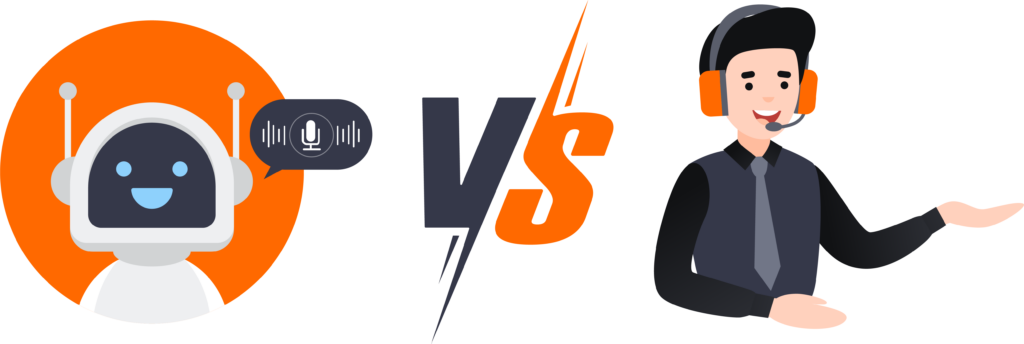
Mode of Communication
- Voicebot vs Chatbot: Voicebots operate through voice commands, offering a natural conversational experience. They are designed for hands-free interactions, making them perfect for scenarios where users cannot type, such as driving or multitasking. Voice bots for customer service mimic human-like interactions using advanced speech recognition, providing a personal touch to customer support.
- Chatbot vs Voicebot for customer service: Chatbots engage users through text. This makes them more suitable for written communication, especially in environments where speaking aloud is inconvenient. Customer support chatbot service is versatile and effective across platforms like websites, messaging apps, and social media.
Ease of Interaction
- Voicebot vs Chatbot for customer service: Voicebots are ideal for hands-free, multitasking scenarios. They are particularly useful for users with accessibility needs or those who prefer spoken communication over text. By responding in real-time and understanding context, AI voice bots for customer service create an intuitive experience.
- Customer care chatbot: Chatbots excel in discreet interactions. In public spaces where speaking aloud isn’t feasible, chatbots for customer support provide a quiet, efficient way to resolve queries. They’re also excellent for users who prefer quick, text-based resolutions.
Complexity and Setup
- Voicebots in customer service require advanced speech recognition systems and consistent optimization to handle diverse accents and languages effectively. Their setup involves integrating sophisticated NLP algorithms and hardware like voice-enabled devices or telephony systems.
- AI customer service chatbots are relatively easier to set up. With pre-built templates and straightforward workflows, even small businesses can deploy chatbots for customer care quickly. They don’t require specialized hardware, making them more accessible.
Channel Compatibility
- Voice bots AI and AI chatbots integrate seamlessly with voice-enabled devices such as Alexa, Google Assistant, and phone systems. They work best in voice-first environments, enabling a hands-free user experience.
- Best AI customer service chatbot: Chatbots are highly compatible with digital channels, including websites, mobile apps, and popular messaging platforms like WhatsApp, Facebook Messenger, and Slack. This flexibility allows businesses to meet customers where they are.
Personalization
- Voicebot for customer support: Voicebots use voice modulation and emotional tone to mimic human-like interactions. They can detect sentiment and adjust their tone, making conversations feel more personal and empathetic.
- AI-powered voice bots for enterprise: Chatbots personalize interactions by leveraging customer data and interaction history. For instance, they can greet returning users by name, suggest relevant products, or provide tailored solutions based on past queries.
Implementation Cost
- Voicebot vs Chatbot: Voice bots for customer service are generally more expensive to implement. The need for advanced hardware, robust software systems, and ongoing optimization contributes to their higher costs. They are better suited for businesses with larger budgets and significant call volumes.
- Best chatbots for customer service: Chatbots are cost-effective, making them a popular choice for businesses of all sizes. With minimal setup costs and affordable pricing models, they are particularly advantageous for startups and small to medium-sized enterprises.
User Preferences
- AI customer service voice bot: Voicebots are favored for detailed, time-sensitive inquiries where verbal communication is more intuitive. Industries like healthcare, finance, and logistics benefit greatly from AI voice bots and AI chatbots for customer service due to their conversational depth and immediacy.
- Customer support bot: Chatbots are preferred for convenience and quick resolutions. They’re perfect for addressing straightforward queries, offering product recommendations, or assisting with transactional needs in text-based environments.
Key Benefits of AI Voicebots and Chatbots for Customer Support
Benefits of AI Voicebots for Customer Support:
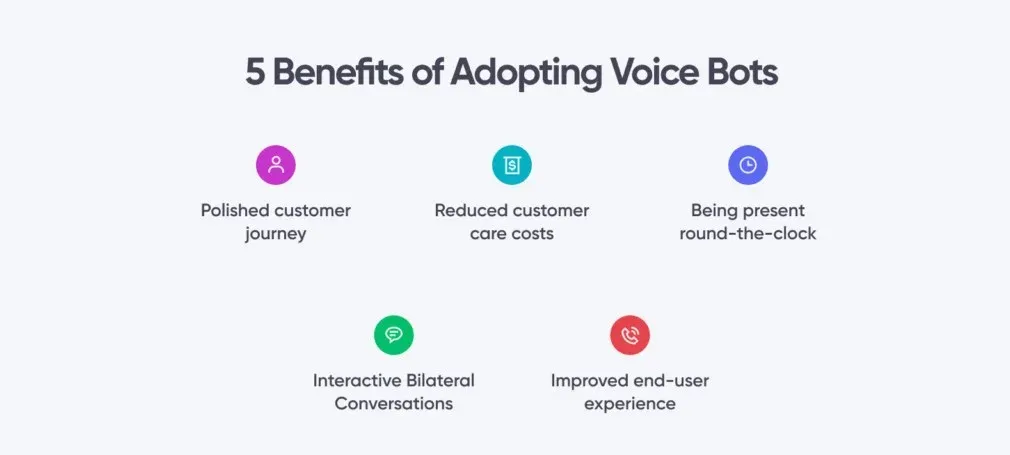
- Natural Conversations: Voicebots excel at creating a seamless conversational flow, mimicking human speech patterns to ensure users feel heard and understood. This human-like interaction builds trust and enhances the overall experience.
- High-Volume Handling: Voicebots are capable of managing a large number of simultaneous voice interactions. They significantly reduce wait times, especially during peak hours, ensuring that customer inquiries are addressed promptly and efficiently.While voicebots are ideal for voice interactions, chatbots for customer support provide a great solution for text-based queries, contributing to a streamlined customer service experience.
- Accessibility: With their voice-first design, voicebots cater to users with visual impairments or limited typing abilities. They empower a wider audience to access services effortlessly, fostering inclusivity.
Benefits of AI Chatbots for Customer Support:
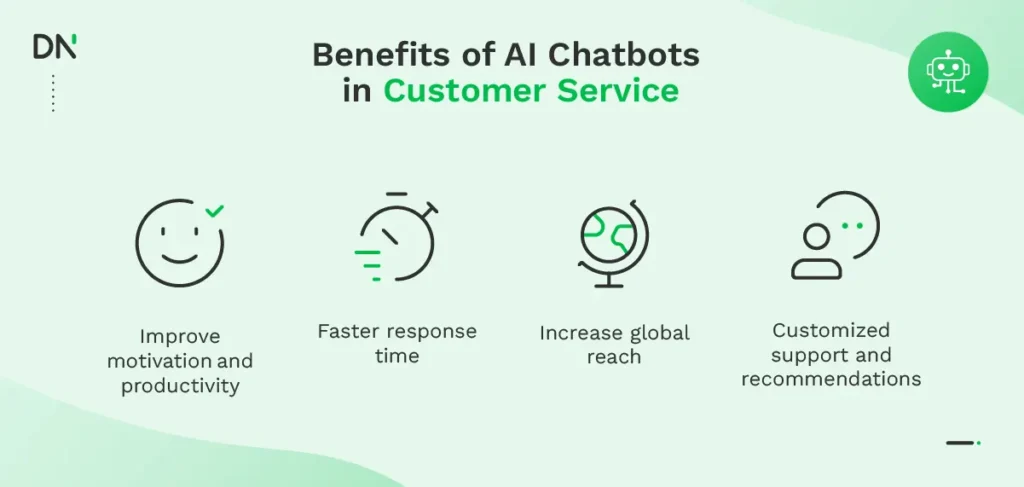
- Instant Responses: Chatbots provide immediate replies to user queries, eliminating delays and maintaining a quick-paced interaction. This ensures customers can find answers and resolve issues without unnecessary waiting. Chatbots offer businesses the ability to automate customer support queries, enabling quick resolution for customers and a streamlined service model for businesses.
- Efficiency:By automating repetitive tasks such as answering FAQs or processing straightforward requests, chatbots free up human agents to focus on more complex or high-priority cases, improving productivity. AI chatbots are designed to be efficient, reducing wait times and increasing productivity in customer service departments.
- Platform Versatility: Chatbots operate seamlessly across a variety of platforms, including websites, messaging apps, and social media channels. This ensures customers can engage with them in their preferred digital environment. Chatbots utilize conversational AI for customer service, providing a seamless and intuitive interaction for customers across multiple channels. To learn more about the distinct roles of Chatbots and Conversational AI in enhancing customer experiences, explore our full blog.
Shared Benefits:
- Scalability:Both voicebots and chatbots can handle growing customer demands without compromising service quality. They adapt to increased interaction volumes as businesses expand, ensuring smooth operations. Voice bots and chatbots both offer scalable solutions, whether it’s voice-based or text-based customer interaction.
- Integration Capabilities: These AI tools integrate with existing customer relationship management (CRM) systems, streamlining workflows and improving data accessibility. This enhances the efficiency of customer support teams. Integration with CRM systems allows AI voice bots and AI chatbots for customer service to work together seamlessly, improving overall service and customer experience.
- Cost Savings: By automating routine interactions, businesses save on operational costs while maintaining or enhancing the quality of their customer service. These AI solutions provide a high return on investment over time. Both AI chatbots and AI voice bots offer cost-effective solutions for customer service departments, delivering high returns on investment.
Voicebot vs Chatbot: Which AI Is Best for Customer Support in 2026?
When choosing between Voicebot vs Chatbot for customer support, it’s essential to consider your business objectives, customer preferences, and operational requirements. Each solution offers distinct advantages that cater to specific use cases. Here’s a detailed comparison to help you decide:
Choose Voicebots if:
- Your Customers Prefer Voice Interactions: Voice Bots for Customer Service excel in delivering a natural, conversational experience, making them ideal for customers who find voice interactions more intuitive and convenient.
- You Handle a High Volume of Phone-Based Queries: If your business receives numerous phone calls daily, a Voicebot for Customer Support can efficiently manage call traffic, provide instant assistance, and escalate complex queries to human agents when necessary.
- Real-Time Verbal Assistance is Critical: Industries like healthcare, travel, or financial services often require real-time, interactive support. Voice Bots AI and AI Chatbots can provide immediate answers, book appointments, or guide users through processes with ease.
- Accessibility and Hands-Free Operation are Priorities: Voicebots are especially beneficial for users who rely on hands-free interactions, such as when driving, multitasking, or for those with visual impairments, enhancing overall accessibility.
Choose Chatbots if:
- Your Operations are Centered Around Text-Based Platforms: Chatbot for Customer Support is ideal for businesses that operate primarily on websites, mobile apps, or messaging platforms like WhatsApp, Facebook Messenger, or Slack.
- Cost-Efficiency is a Key Consideration: Customer Support Chatbot Service is generally more cost-effective to implement and maintain than voicebots, making them a practical choice for businesses looking to optimize their budget.
- You Need Standardized Support Across Multiple Channels: Customer Service Chatbot AI can be deployed across various platforms, ensuring consistent messaging and quick resolution of frequently asked questions, improving customer satisfaction.
- 24/7 Availability is Crucial: AI Customer Service Chatbot can operate around the clock, providing instant support even outside of business hours, ensuring your customers receive assistance whenever they need it.
Factors to Consider When Choosing AI Voicebots or Chatbots
When deciding between Voicebot vs Chatbot for your customer support needs, it’s essential to evaluate several factors to ensure the solution aligns with your business needs and customer expectations.

1. Customer Demographics
Understanding your target audience is crucial. Assess their communication preferences—whether they favor voice interactions or text-based communication.
- Age: Younger audiences may lean towards Chatbot for Customer Support due to familiarity with text-based apps, while older customers might prefer Voice Bots for Customer Service for conversational ease.
- Tech-Savviness: Tech-savvy customers often adapt well to AI Customer Support Bot, whereas AI Voice Bots for Customer Service may appeal to those seeking simplicity.
- Geographic Location: Cultural preferences and regional adoption rates of Voicebot vs Chatbot for Customer Service can significantly influence your choice.
2. Industry Needs
Different industries have distinct communication requirements.
- Voicebots: Best suited for industries where detailed, nuanced verbal communication is necessary, such as healthcare (patient consultations) and finance (transaction clarifications or advisory services).
- Chatbots: Chatbots excel in sectors like e-commerce (product recommendations), travel (itinerary management), and tech support (troubleshooting), where quick, text-based interactions are the norm.
3. Budget
Budget constraints often dictate the feasibility of implementing AI solutions.
- Voicebots: Voicebots typically demand higher upfront investments for hardware, software, and ongoing support, making them a better fit for established organizations with ample resources.
- Chatbots: Chatbots offer a more cost-effective alternative with easier deployment, making them an ideal choice for startups and small businesses.
4. Integration
AI solutions need to work seamlessly with your existing systems to deliver value.
- Compatibility: Check for integration with your current CRM (Customer Relationship Management), ticketing systems, or ERP (Enterprise Resource Planning) tools. A well-integrated system ensures smoother operations and better customer experiences with AI Chatbot Support.
5. Scalability
Your business needs may evolve, and your AI solution should adapt accordingly.
- Scalability: Opt for platforms that can handle increased traffic, support new languages, or accommodate expanded functionalities as your business grows, especially when considering the scalability of AI Voice Bots vs AI Chatbots.
6. Technology Trends
Staying updated with the latest advancements in AI can significantly enhance the effectiveness of your voicebot or chatbot.
- Emerging Features: Technologies such as sentiment analysis, predictive responses, and advanced natural language understanding (NLU) can improve user experiences with both Customer Support AI Chatbot and AI Voice Bots for Customer Service.
- Innovation Adoption: Keeping pace with trends ensures that your solution remains competitive and aligns with customer expectations, whether you are using the Best Customer Support AI Chatbot and AI Voicebot.
By carefully evaluating these factors, you can choose the right Voicebot vs Chatbot solution that aligns with your business goals and delivers an exceptional user experience. For a deeper dive into features and best practices, see AI voice and chatbots guide.
Common Use Cases for Voicebots and Chatbots in Customer Support
Voice Bots and Chatbots are revolutionizing the customer support landscape, offering efficient, scalable, and personalized solutions to meet customer needs. Below are key use cases highlighting how these technologies streamline operations and enhance customer experiences.
Use Cases of AI Voicebot:
- Appointment Scheduling
Voice Bots for Customer Service simplify the booking process by guiding users through the scheduling steps and providing real-time confirmations. Whether it’s a doctor’s appointment, a salon visit, or a consultation call, customers can schedule seamlessly without waiting in a queue for human assistance. - Complex Queries
Voicebot vs Chatbot for Customer Service: Voicebots excel in handling multi-step or detailed inquiries where customers need verbal clarification or step-by-step guidance. For example, troubleshooting technical issues or explaining intricate policies becomes faster and more effective through verbal interactions. - Hotlines
During high-call-volume scenarios, Voice Bots and Chatbots act as the first line of defense, providing immediate assistance to customers. They can answer common queries, direct calls to the right departments, and even follow escalation protocols if human intervention is needed.
Use Cases of AI Chatbot:
- FAQ Assistance
Customer Support Chatbot Service can resolve repetitive queries instantly with pre-programmed responses. This is especially useful for businesses dealing with large volumes of routine questions, such as operating hours, refund policies, or troubleshooting guides. Learn how to build an effective FAQ Chatbot to address customer inquiries efficiently and improve service quality - E-commerce Support
From helping customers find the right product to providing updates on order status and facilitating returns, Best Chatbot for Customer Support enhances the online shopping experience. They can also upsell or cross-sell by recommending complementary products based on customer preferences. - Lead Generation
Customer Service Chatbot AI engages with website visitors, collects essential information, and qualifies leads through interactive and conversational methods. They ensure that potential customers are nurtured and passed on to sales teams with sufficient context.
Combined Use Cases
- Omnichannel Support
By integrating AI Voice Bots and AI Chatbots, businesses can provide a seamless customer experience across platforms. For example, a customer starting a query on a Customer Care Chatbot can switch to a voicebot for additional assistance without losing context, ensuring a consistent and unified interaction. Learn more about creating a seamless omnichannel customer support experience to enhance customer satisfaction and engagement.
- Customer Feedback
Both voicebots and chatbots can gather valuable insights post-interaction through surveys or ratings. This feedback helps businesses identify areas of improvement and enhance service quality over time, maximizing the effectiveness of AI Powered Voice Bots for Enterprise and other customer support tools.
Conclusion
Voicebot vs Chatbot for Customer Service: Voicebots and chatbots are transformative tools in the realm of Conversational AI for Customer Service. While both have unique strengths, the right choice depends on your business objectives and customer preferences. By understanding the differences between AI Chatbots Support and AI Voice Bots for Customer Service, you can select the best solution for your needs.
Choosing the Best AI for Customer Service hinges on evaluating several key factors such as customer demographics, industry needs, and budget. Whether you opt for AI Voice Bots and AI Chatbots or a combination of both, ensuring seamless integration with your existing systems is essential. These solutions not only improve efficiency but also enhance the overall customer experience by providing faster response times, 24/7 availability, and personalized interactions. The future of Customer Support AI Chatbot and AI Voicebot technology lies in continuous innovation, with businesses adopting Voice Bots for Customer Support to stay ahead of the curve. With the right strategy, businesses can leverage AI Powered Voice Bots for Enterprise to drive better outcomes in customer support and service delivery.
FAQs
1. What is the difference between a Voicebot and a Chatbot for customer service?
oicebots and chatbots differ mainly in how customers interact with them. Voicebots allow users to communicate using natural speech, while chatbots rely on text-based messaging. Voicebots are ideal for complex conversations, providing a more natural and human-like flow, whereas chatbots excel at handling quick, simple queries.
Wizr AI enables enterprises to build and deploy AI agents and assistants across voice and text interactions through its Enterprise AI Services and AI-powered automation solutions, helping improve overall customer support efficiency.
2. How do Voicebots work in customer service?
Voicebots use AI-powered speech recognition and natural language processing (NLP) to understand spoken customer queries and respond in real time. They can handle tasks like scheduling appointments, troubleshooting issues, and routing calls to the right agents, all without human intervention.
With Wizr AI’s agentic AI capabilities, enterprises can build voice-enabled AI agents and workflows that automate complex support processes while maintaining accurate, context-aware conversations.
3. Are AI Voicebots and AI Chatbots interchangeable?
No. AI voicebots and chatbots serve complementary but different purposes. Chatbots are optimized for quick text-based interactions, while voicebots excel at verbal, multi-step conversations. Choosing the right tool depends on whether your support needs are text-heavy or voice-driven.
Wizr AI provides Enterprise AI Services and agentic AI solutions, enabling organizations to orchestrate workflows across voice and text channels and maintain consistent support experiences rather than relying on standalone chatbot or voicebot tools.
4. What are the benefits of using a Voicebot for customer support?
Voicebots offer faster response times, 24/7 availability, and the ability to handle complex verbal queries. They reduce wait times, automate repetitive tasks, and enhance customer satisfaction by providing human-like interactions.
By leveraging Wizr AI’s pre-built and configurable AI agents for customer support, enterprises can streamline operations, improve resolution speed, and free up agents for higher-value tasks.
5. Can chatbots help with lead generation?
Yes. Chatbots engage website visitors, qualify leads, and collect key information automatically. They ensure your sales team receives actionable context, improving conversion rates and efficiency.
Wizr AI enables enterprises to build AI assistants and workflows that integrate with enterprise systems like CRM platforms, turning automated interactions into measurable business outcomes.
6. How do Voicebots and Chatbots integrate with multi-channel support?
Both voicebots and chatbots can integrate across multiple channels, including web chat, mobile apps, phone lines, and social media platforms. This ensures consistent customer interactions, regardless of the channel used.
With Wizr AI’s Enterprise AI Services and AI-powered automation solutions, organizations can orchestrate agentic workflows across channels, maintaining context and improving operational efficiency.
7. Can AI chatbots and voicebots provide analytics for customer support?
Yes. AI chatbots and voicebots collect interaction data, track sentiment, and generate actionable insights. This helps teams identify trends, monitor agent performance, and continuously improve support quality.
Wizr AI’s AI solutions and Enterprise AI Services enable enterprises to derive insights from customer interactions, supporting continuous optimization of support workflows and service effectiveness.
About Wizr AI
Wizr AI helps enterprises build autonomous enterprises and accelerate product and software engineering with practical, production-ready AI. We help organizations automate business workflows, modernize legacy applications and digital platforms, and build intelligent AI solutions.
Our core services include Enterprise AI Services, AI-Powered Engineering & Legacy Modernization, AI Product Engineering, and AI Governance. We also leverage AI Assembly capabilities, including the Agentic AI Framework, Agentic Workflows, Security, and Integrations.
Through our AI solutions, including AI Agents, Pharma & Life Sciences AI, Oracle AI, and Salesforce AI, we help enterprises apply AI across business and technology needs.
See how we can help your enterprise move faster with AI. 👉 Talk to an AI Expert.


![Agentic AI vs AI Agents: Key Differences Every CIO Must Know [2025 Guide]](https://wizr.ai/wp-content/uploads/2025/07/Agentic-AI-vs-AI-Agents.webp)
![Agentic AI vs Traditional Automation: Why Enterprises Shift for Better CX [2025]](https://wizr.ai/wp-content/uploads/2025/06/Agentic-AI-vs-Traditional-Automation.webp)


![11 Real-World AI Agents Examples + Use Cases for Enterprises [2025]](https://wizr.ai/wp-content/uploads/2025/05/AI-Agents-Examples-Use-Cases.webp)