The world of customer experience is evolving rapidly. As companies strive to meet rising expectations across digital channels, many realize their traditional automation tools are struggling to keep up. Today’s customers expect more than just fast responses they want interactions that feel authentic, thoughtful, and effortless.
Basic automation can handle routine tasks, but it often misses the bigger picture. It cannot fully grasp context, sentiment, or the subtle nuances that make conversations feel human. That’s the issue – businesses are relying on tools that can’t understand their customers, highlighting the limitations of traditional automation in enterprise workflows compared to agentic AI frameworks for enterprise solutions.
Meet Agentic AI. This is a new type of artificial intelligence built to do more than just follow orders. It can think through tough situations, make decisions, and adjust, demonstrating why autonomous AI agents in enterprise automation are key to modern customer experiences. According to a 2025 Gartner report, organizations implementing agentic AI in customer workflows report up to 40% faster resolution times and improved customer satisfaction. This article explores Agentic AI vs Traditional Automation, why businesses are moving to Agentic AI for Enterprise CX, why old automation falls short, and how this change is transforming how customers interact with companies.
Static automation is falling short. Today’s CX demands systems that adapt, learn, and respond in real time – exactly what Agentic AI delivers.
This blog unpacks the key differences between Agentic AI vs Traditional Automation and shows why enterprises are shifting to intelligent agents that personalize, evolve, and drive better outcomes.
If you’re rethinking automation for smarter customer experiences, this is your roadmap. Read the full post to see how Wizr is leading the shift.
What Is Agentic AI?
![Agentic AI vs Traditional Automation: Why Enterprises Shift for Better CX [2025]](https://wizr.ai/wp-content/uploads/2025/06/Agentic-AI-vs-Traditional-Automation-1024x538.webp)
Agentic AI refers to AI systems that exhibit goal-setting, adaptive behavior, and autonomous decision-making. Unlike traditional automation, Agentic AI can assess situations, adjust its actions, and act proactively to align with larger enterprise goals. This makes it ideal for use cases in enterprise automation, customer experience, and dynamic workflows where AI-powered decision-making is critical.
Agentic AI takes a large step forward from static workflows and fixed programmed rules often seen in traditional automation solutions. It describes intelligent systems that can set goals, learn from what happens, and act in ways that fit larger objectives. Unlike old-school bots or automated scripts that sit idle until a user gives instructions, Agentic AI workflows in enterprise automation engage, predict needs, and change their actions based on what they notice in the situation.
The core idea of Agentic AI lies in its “agency.” It means having the capability to make decisions, evaluate choices, and change direction when things shift. In customer service, this could mean an AI assistant that does more than just answer questions. It might pick up on a user’s frustration, adapt the way it communicates, and offer alternative solutions without needing a direct request, illustrating the difference between AI agentic frameworks for enterprise efficiency and traditional automation architecture.
How Does It Improve Customer Experience?
Customers see Agentic AI as offering easier and smarter interactions. They can avoid repeating details, juggling between channels, or facing useless answers. Instead, they engage with a system that seems to understand and adjust to their needs. This shifts the focus from transaction to connection by easing challenges, earning trust, and creating a more meaningful experience – key benefits of AI-powered automation for enterprise CX over traditional automation.
In customer experience settings, Agentic AI manages unclear situations, shifts in context, and back-and-forth discussions. It does not just address issues but does so in a way that feels custom-made and considerate. This makes a big difference to how modern businesses operate and why they are investing in Agentic AI use cases in enterprises, seeking the best autonomous AI agents for enterprise success.
Why Are Enterprises Shifting from Traditional Automation in 2026?
The move away from older automation systems isn’t happening because they failed. They’ve just hit their limits. Businesses that jumped on automation saw big gains in productivity and growth. But as technology has grown and customers now expect more, these systems are beginning to show their shortcomings. A research by Cisco states that by 2027, Agentic AI for Enterprise CX will handle 68% of customer service and support interactions, highlighting the shift from Agentic AI vs Traditional Automation.
Companies today deal with more complicated customer experiences. Someone might start asking for help on their phone, switch to their computer, and then call to follow up – all in no time. Older automation systems, which depend on step-by-step processes, struggle to handle this kind of fast-changing communication compared to Agentic AI workflows in enterprise automation and AI-Driven Automation in Enterprises.
Rule-based automation stays rigid, making it hard to handle surprises or adjust when priorities shift. Developers must step in for any updates, which slows progress and adds pressure on IT teams, unlike AI Agentic Frameworks for Enterprise Efficiency and Autonomous AI Agents in Enterprise Automation that can adapt more easily.
Customer perception is another issue. Robotic replies, fixed responses, and constant redirections often make users feel ignored. When this happens, loyalty to the brand fades. Companies are realizing that quick service does not equal good service. To improve, intelligence, care, and flexibility are needed, which is where Agentic AI Tools vs Traditional Automation Tools make a significant difference.
Agentic AI matches human thinking and actions more. It has an influence on making customer support a key strength instead of just a business expense. This change is bigger than just improving technology; it’s about rethinking how companies bond with their customers.
What is Traditional Automation?
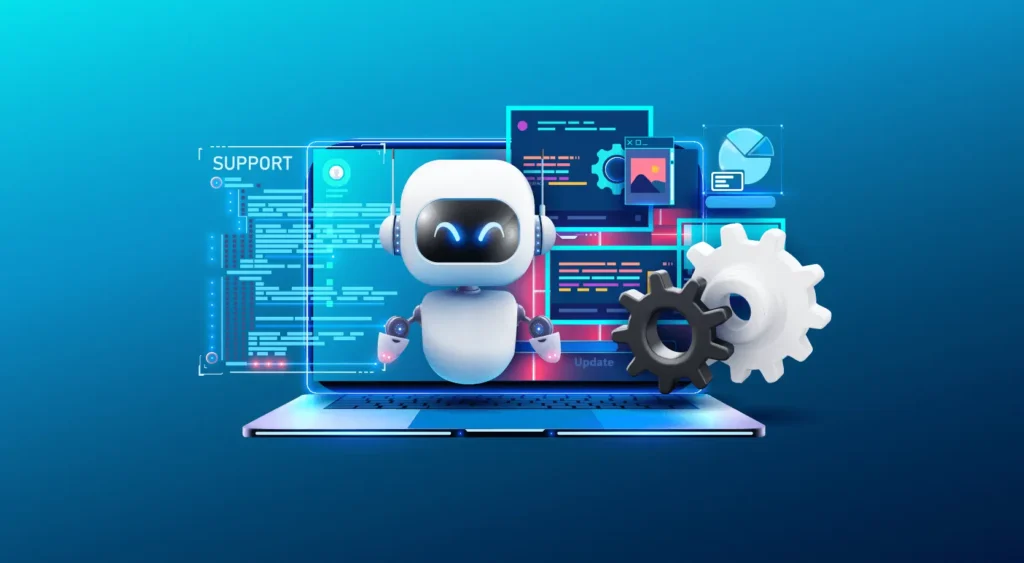
Traditional automation refers to rule-based systems designed to perform predefined, repetitive tasks with speed and accuracy. It is commonly used in customer service, manufacturing, and IT operations to reduce human error and scale processes without increasing costs. Traditional automation has its place. In fact, it’s the reason many businesses were able to scale customer service operations without proportionally increasing costs. It’s excellent at performing predefined tasks repeatedly, without error, and at high speed.
Limitations & Strengths
However, its strengths are often overshadowed by its weaknesses in today’s environment. Traditional automation struggles when interactions fall outside the norm. If a customer deviates from the expected input, the system either breaks or passes the issue to a human agent, creating delays and frustration. This highlights the contrast between Agentic AI Examples vs Traditional Automation Examples and AI Agentic Workflows vs Rule-Based Automation.
Another challenge is its inability to evolve. Traditional automation doesn’t learn – it simply follows instructions. If a new customer behavior emerges or a policy changes, the system needs manual reprogramming. This dependency on developers for even minor tweaks creates bottlenecks and limits responsiveness, unlike Agentic AI Frameworks for Enterprise Solutions that can learn and adapt.
And then there’s context – or the lack of it. Each interaction is treated as isolated, with no memory of past engagements. That means customers have to repeat themselves across channels, which feels disconnected and impersonal compared to AI Agentic Frameworks for Enterprise Efficiency and Agentic AI Architecture vs Traditional Automation Architecture.
To be fair, traditional automation still excels at handling repetitive, low-risk tasks. It’s reliable, cost-effective, and well-suited for back-end operations like processing forms or updating databases. But when it comes to delivering empathetic, real-time, cross-channel customer experiences, its limitations are clear.
Agentic AI Vs. Traditional Automation: Key Differences Explained
| Feature | Traditional Automation | Agentic AI |
| Approach | Rule-based, follows predefined paths | Goal-driven, adapts to dynamic conditions |
| Flexibility | Fixed logic, hard to adjust | Self-adjusting, learns from context and outcomes |
| Memory | Stateless; no knowledge of past interactions | Maintains memory across sessions and channels |
| Interactivity | Responds to triggers, limited conversation flow | Handles multi-turn, adaptive dialogues naturally |
| Human-Like Behavior | Robotic, repetitive responses | Emotionally aware, contextual, and adaptive |
| Problem Solving | Can handle basic issues with clear resolution paths | Navigates ambiguity and escalates intelligently |
| Learning Capability | No learning; manual updates required | Learns from interactions to improve over time |
| Customer Perception | Efficient but impersonal | Helpful, proactive, and engaging |
| Operational Overhead | Developer-heavy maintenance | Less manual tuning, more autonomous optimization |
| Strategic Impact | Operational support role | Core enabler of business innovation and CX leadership |
This comparison highlights the fundamental difference: traditional automation follows instructions, while Agentic AI takes initiative.
How Does Agentic AI Drive Better Customer Experience Outcomes?
Agentic AI brings a layer of intelligence that transforms every interaction into an opportunity for engagement. 89% of surveyed CIOs consider agent-based AI a strategic priority, showcasing the importance of AI-Driven Automation in Enterprises in decision-making and solution-oriented approach. Agentic AI doesn’t just resolve issues – it builds relationships. Here’s how it enhances Agentic AI for Enterprise CX outcomes across the board:
1. Intelligent Resolution Paths
Customers rarely articulate their problems in neat, pre-scripted ways. Agentic AI excels at interpreting vague, complex, or emotionally charged requests. It doesn’t just wait for the right keyword – it analyzes intent and context, crafting an appropriate, dynamic response.
2. Seamless Cross-Channel Experiences
When a customer moves between web, app, and voice channels, the experience often feels disjointed. Agentic AI stitches those touchpoints together, carrying memory and context across platforms to ensure continuity and personalization throughout the journey.
3. Real-Time Emotion Management
Agentic AI can detect and respond to customer emotions. Whether someone is frustrated, confused, or just looking for a quick update, it adjusts its tone, pace, and language accordingly. This makes the experience feel natural and human – not scripted.
4. Self-Improvement Over Time
Every interaction becomes a learning opportunity. Instead of waiting for humans to audit performance or adjust rules, Agentic AI refines its responses on the fly. It identifies gaps, suggests new approaches, and tunes itself for higher efficiency and satisfaction.
5. Empowered Human Agents
When escalation is needed, Agentic AI doesn’t just pass the baton – it provides a full context summary, suggested actions, and customer sentiment analysis. This empowers human agents to resolve issues faster and with greater empathy, improving team performance and morale.
How Wizr AI Enables CX Transformation with Agentic AI
Wizr AI helps enterprises adopt Agentic AI to transform customer experience by combining AI-powered automation, agentic workflows, and enterprise AI services. Rather than offering simple rule-based bots, Wizr enables organizations to deploy intelligent AI agents that support real enterprise workflows and CX outcomes.
With Wizr, businesses can:
- Design Goal-Oriented Agents: These are not just conversational bots – they are AI agents and assistants designed to support key CX metrics such as resolution time, escalation reduction, and customer satisfaction.
- Integrate Context Across Systems: Wizr agents integrate with CRMs, helpdesks, knowledge bases, and enterprise systems to provide contextual and coordinated support across customer interactions.
- Improve and Optimize Continuously: Wizr’s AI governance and services support teams in monitoring agent performance, analyzing outcomes, and optimizing workflows over time through governance, analytics, and human oversight.
- Scale CX Automation Securely: Enterprises can deploy AI agents and workflows across customer support operations while maintaining governance, security, and compliance.
For enterprises looking to move beyond the limitations of Traditional Automation in Enterprise Workflows and deliver better customer experiences, Wizr provides enterprise AI services and solutions to help organizations deploy Agentic AI at scale.
Conclusion
The choice between Agentic AI vs Traditional Automation is more than a technical upgrade – it’s a strategic reorientation. In an age where customer expectations are shaped by immediacy, personalization, and emotional intelligence, businesses can no longer afford to rely solely on static, rule-bound systems.
Agentic AI for Enterprise CX brings the intelligence, adaptability, and human-like nuance that CX strategies now demand. It’s not about replacing people – it’s about empowering them, enhancing the experience, and building systems that grow smarter with every interaction.
As more enterprises adopt Autonomous AI Agents in Enterprise Automation, the gap between organizations using intelligent automation and those relying on legacy workflows will continue to grow. The future of CX belongs to enterprises that deploy systems capable of reasoning, learning from interactions, and supporting teams at scale.
FAQs
1. How does Agentic AI differ from traditional automation?
Agentic AI differs from traditional automation by being adaptive, context-aware, and capable of supporting more complex decision-making. While traditional automation follows fixed rule-based processes, Agentic AI systems can interpret context and assist with dynamic workflows.
Key differences:
- Agentic AI is dynamic; traditional automation is static
- Agentic AI adapts to context; traditional systems follow scripts
- Agentic AI improves over time; traditional tools require manual updates
Wizr AI helps enterprises move beyond basic automation by deploying AI agents and workflows that personalize responses, reduce escalations, and improve support operations.
2. What are the key differences between Agentic AI and traditional process automation?
The key difference lies in how decisions and workflows are handled. Traditional process automation works best with predictable tasks but lacks flexibility when inputs change. Agentic AI uses large language models and contextual data to support more adaptive workflows.
Here’s a quick breakdown:
- Traditional automation = rule-based, rigid, manual updates
- Agentic AI =adaptive, context-aware, decision-support capable
With Wizr AI, organizations can deploy secure AI agents and workflows through enterprise AI services and solutions, helping teams scale intelligent automation across enterprise support operations.
3. Why are enterprises shifting from traditional automation to Agentic AI?
Enterprises are adopting Agentic AI because it can handle more complex customer interactions than traditional automation tools. While traditional automation works well for repetitive tasks, Agentic AI can interpret context, prioritize issues, and assist support teams with faster resolutions.
Top reasons for the shift:
- Higher accuracy in dynamic environments
- Reduced dependency on manual process design
- Better user experience through personalization
With Wizr AI, organizations can deploy secure AI agents and workflows using our platform and platform-enabled services, helping teams scale intelligent automation across enterprise support operations.
4. How does Agentic AI improve customer experience compared to traditional tools?
Agentic AI improves customer experience by providing faster, more contextual responses to customer issues. Unlike traditional automation that relies strictly on scripts, Agentic AI can interpret context and assist support teams with better recommendations.
Benefits include:
- Real-time sentiment detection
- Smarter ticket triage and deflection
- Personalized, multi-turn conversations
Wizr AI’s CX capabilities include AI agents, CX Agent Assist, and CX Control Room, which integrate with enterprise systems to provide insights, contextual responses, and operational visibility across support teams.
5. What are real-world examples of Agentic AI use cases in enterprises?
Agentic AI is already being used to improve enterprise support operations and internal workflows.
Examples include:
- Detecting sentiment trends to identify potential escalations
- Automated ticket triage and routing
- Providing contextual responses using knowledge base data
- Supporting employee helpdesk or IT support requests
Wizr AI enables these use cases through our platform combined with implementation and AI services, helping enterprises automate workflows while maintaining governance and control.
6. How does Agentic AI architecture compare to traditional automation architecture?
Agentic AI architecture is designed to support more flexible, context-aware workflows. It leverages large language models, contextual data, and workflow orchestration. Traditional automation architectures rely primarily on predefined rules and static workflows.
Comparison:
- Traditional = static workflows, rule-driven logic
- Agentic = intelligent agents, contextual reasoning, scalable workflows
Wizr AI helps enterprises transition toward Agentic AI through enterprise AI services that support the design, deployment, and governance of AI agents with enterprise-grade oversight.
7. Agentic AI vs traditional automation: which is better for modern enterprises?
For modern enterprises, Agentic AI often delivers better results in areas requiring personalization, adaptability, and contextual decision-making. However, traditional automation still plays a role in predictable, repetitive tasks.
Typical usage:
- Traditional automation → data entry, notifications, rule-based routing
- Agentic AI → customer support, sentiment detection, intelligent triage
Wizr AI supports both approaches by enabling enterprises to combine rule-based workflows with Agentic AI agents, allowing teams to automate processes more intelligently and securely.
About Wizr AI
Wizr AI helps enterprises build autonomous enterprises and accelerate product and software engineering with practical, production-ready AI. We help organizations automate business workflows, modernize legacy applications and digital platforms, and build intelligent AI solutions.
Our core services include Enterprise AI Services, AI-Powered Engineering & Legacy Modernization, AI Product Engineering, and AI Governance. We also leverage AI Assembly capabilities, including the Agentic AI Framework, Agentic Workflows, Security, and Integrations.
Through our AI solutions, including AI Agents, Pharma & Life Sciences AI, Oracle AI, and Salesforce AI, we help enterprises apply AI across business and technology needs.
See how we can help your enterprise move faster with AI. 👉 Talk to an AI Expert.


![Agentic AI vs AI Agents: Key Differences Every CIO Must Know [2025 Guide]](https://wizr.ai/wp-content/uploads/2025/07/Agentic-AI-vs-AI-Agents.webp)


![11 Real-World AI Agents Examples + Use Cases for Enterprises [2025]](https://wizr.ai/wp-content/uploads/2025/05/AI-Agents-Examples-Use-Cases.webp)