The automotive industry has always run on complexity. Thousands of parts, global supply chains, strict safety rules, and millions of customers. In 2026, a new kind of technology is helping carmakers manage that complexity: agentic AI.
Unlike older automation that follows fixed scripts, agentic AI can reason, plan, and act on its own, inside clear limits. That makes it a natural fit for the messy, multi-step work that fills an automotive enterprise.
The shift is real and measurable. Gartner expects 40% of enterprise applications to include task-specific AI agents by the end of 2026, up from less than 5% in 2025. Automotive is one of the sectors moving fastest.
This guide walks through the top Agentic AI Use Cases in Automotive Industry settings for 2026. We cover what agentic AI is, why automakers are adopting it, the top use cases across engineering, manufacturing, supply chain, and customer service, and how to implement it at scale. The goal is a practical playbook for CIOs and enterprise leaders.
A quick note on scope. These are agentic AI enterprise use cases, chosen for large automotive organizations that care about governance, scale, and real production value, not science projects. Whether you lead engineering, operations, supply chain, or IT, the automotive AI agents use cases below map to problems you already face. We keep each one practical, with the business impact spelled out, so you can see where to start.
Timing matters here. The automotive industry is in the middle of its biggest shift in a century, from hardware-first to software-defined vehicles, from combustion to electric, and from one-time sales to ongoing mobility services. Every one of those shifts adds complexity, and agentic AI is one of the few tools that scales to meet it. The automakers reading this guide and acting on it now are the ones most likely to come out ahead, because the gap between early movers and laggards is widening fast.
What Is Agentic AI in the Automotive Industry?
Agentic AI is artificial intelligence that can act on its own to reach a goal. Instead of just answering a question, an AI agent can plan a series of steps, use tools, make decisions, and complete a task, with humans supervising where it matters.
In the automotive world, that means AI that does real work. An agent can investigate a quality defect, reorder a part, draft a dealer response, or test a piece of vehicle software, not just suggest what to do. This is the promise of agentic AI in automotive: autonomous AI systems that handle complex, multi-step work while people stay in control of the decisions that matter.

It is worth being precise, since the terms get mixed up. Autonomous AI systems in this context do not mean self-driving cars, though those exist too. Here we mean AI agents that autonomously run business and engineering workflows, from the factory to the back office. These AI agents autonomous systems reason, act, and adapt, which is what separates them from the rule-based automation automakers have used for years.
How is agentic AI different from older AI?
Here is the simplest way to see it. Traditional automation follows fixed rules. Generative AI creates content when asked. Agentic AI goes further, since it pursues an outcome and figures out the steps on its own.
A quick comparison helps:
- Traditional automation: does the same fixed task every time, like moving data between systems.
- Generative AI: creates text, code, or images in response to a prompt.
- Agentic AI: reasons toward a goal, uses tools, and takes multi-step actions with oversight.
This is why agentic AI autonomous systems are such a big deal for automotive. The work in a car company is rarely one simple step. It is a chain of decisions across many systems, which is exactly what agents handle well. For a deeper look at how these systems are built, Wizr’s guide on building multi-agent applications is a useful companion.
Where does generative AI fit? Generative AI use cases in automotive industry settings, like drafting a dealer email or generating a design option, are often a building block inside an agentic system. The agent uses generation as one tool among many, then acts on the result. So gen AI use cases in automotive industry work are not replaced by agents, they are put to work by them. The agentic AI use cases examples throughout this guide show that blend in action, with agents reasoning, generating, and acting together. And looking ahead, AI agents autonomous systems 2026 brings to automotive are only the start, with agentic AI autonomous systems 2026 and beyond set to handle ever more complex work.
Why Automotive Enterprises Are Adopting Agentic AI in 2026
Automakers are not adopting agentic AI for hype. They are doing it because the pressures of 2026 demand it, and the technology is finally ready.
For a decade, AI in the car industry mostly meant analytics and the long road to self-driving. What changed is that AI can now act, not just predict. That unlocks a huge range of everyday business and engineering work, from the factory to finance, that was out of reach before. The result is a wave of practical adoption, where agentic AI quietly runs real workflows rather than starring in a demo. Here is what is pushing automakers to move now.
Here is what is driving adoption:
- Rising complexity. Software-defined vehicles, electric powertrains, and global supply chains have made operations far more complex. Agents help manage that complexity at scale.
- Cost and margin pressure. Tariffs, supply shocks, and competition squeeze margins. Agentic AI cuts manual effort and speeds up decisions.
- Speed to market. Chinese EV makers and new entrants move fast. Agents accelerate engineering, testing, and production.
- Labor and skills gaps. Skilled workers are hard to find. Agents take on repetitive, data-heavy work so people focus on higher-value tasks.
- Mature technology. Agentic AI has moved from demos to production, with the governance and security enterprises needed.
The numbers back this up. McKinsey projects that highly autonomous, AI-powered vehicles could make up 10 to 15 percent of new car sales by 2030, and the intelligence behind those vehicles mirrors the agentic systems now entering the back office and factory. Ford, for example, has used AI agents to speed up design and engineering tasks that once took hours down to seconds.
For automotive enterprises, the message is clear. Agentic AI is no longer experimental. It is becoming a core part of how competitive carmakers run, which is why these automotive agentic AI use cases enterprise leaders are evaluating are worth a close look.
It is also worth naming the risks, since no honest guide skips them. The risks of autonomous AI systems include wrong actions, data exposure, and agents drifting from their intended behavior over time. In a safety-critical industry like automotive, these risks are real, which is why governance and human oversight run through every recommendation in this guide. Handled well, though, the upside is large, and the strongest agentic AI business use cases pair bold automation with firm controls. The sections below cover both the opportunity and how to manage it.
10 Agentic AI Use Cases in the Automotive Industry for 2026
Here are the 10 highest-impact agentic AI use cases in the automotive industry for 2026. Each one targets a real bottleneck, from engineering to the dealership. Together, they show how agentic AI touches the entire automotive value chain.
These are the top agentic AI use cases automakers are prioritizing, spanning engineering, the factory floor, the supply chain, and the customer. Several are agentic AI automotive manufacturing use cases that live on the plant floor, while others focus on AI in automotive manufacturing support functions like supply chain and quality. We have ordered them roughly from engineering through to enterprise operations, but you can start anywhere that fits your biggest pain point. These top automotive agentic AI use cases 2026 has made practical are grouped so you can scan to the ones that matter most to your role.
For each use case, we describe what the agent does, why it matters, and the business impact, so you can judge where the value is real for your organization. Notice a pattern as you read: the biggest gains come where work is complex, repetitive, and spread across many systems, which is most of what an automotive enterprise does. That is exactly the kind of work agents handle well, and it is why automakers are moving so quickly from single pilots to multiple agents running side by side.
1. AI-Powered Automotive Engineering & Software Development
Modern cars are computers on wheels, with hundreds of millions of lines of code. Agentic AI speeds up this engineering work, generating code, writing tests, finding bugs, and modernizing legacy systems.
AI agents can take a requirement, write the code, test it, and open it for human review. This compresses development cycles and frees engineers for higher-value design work. For carmakers racing to ship software-defined vehicles, this is a major edge. Wizr’s AI-powered engineering and legacy modernization services bring exactly this kind of acceleration to automotive software.
Real examples are already here. Ford has used AI agents to speed up design and engineering tasks that once took hours down to seconds. As cars add more software every year, this kind of acceleration is quickly moving from nice-to-have to necessary, since the companies that ship features fastest win customers.
The engineering backlog is also where a lot of hidden costs live. Legacy code, aging platforms, and manual testing slow every new feature and tie up skilled engineers. Agentic AI tackles this on two fronts, accelerating new development while modernizing the old systems underneath, so the whole engineering organization moves faster. For automakers competing with software-first rivals, closing that speed gap is one of the highest-value places to start.
- Business impact: Faster development, fewer defects, lower engineering cost.
2. Predictive Maintenance & Production Optimization
Factory downtime is enormously expensive. Agentic AI monitors equipment in real time, predicts failures before they happen, and can even schedule repairs on its own.
Beyond maintenance, agents optimize the production line itself, adjusting schedules, balancing loads, and responding to disruptions as they occur. This is one of the most valuable agentic AI use cases in manufacturing, since it protects both uptime and output.
The key difference from older predictive tools is action. An older system flags a warning and waits for a human. An agent can open a work order, check parts availability, and schedule the fix, all on its own, with a human approving anything major. That shift from alerting to acting is what makes these agentic AI automotive manufacturing use cases so valuable on the plant floor.
- Business impact: Less downtime, higher throughput, lower maintenance cost.
3. Intelligent Quality Inspection & Defect Resolution
Quality is everything in automotive, where a defect can trigger a costly recall. Agentic AI uses computer vision to inspect parts and vehicles, catching defects humans might miss.
But agents go further than detection. When a defect is found, an agent can trace the root cause, flag affected batches, and trigger a resolution workflow. This closes the loop from spotting a problem to fixing it, improving quality while cutting waste.
This matters because a single missed defect can cascade into a recall affecting millions of vehicles and hundreds of millions of dollars. By catching and resolving issues earlier and more consistently than manual inspection, agentic quality systems reduce both the chance and the cost of that scenario. They also build a traceable record of every inspection, which helps with audits and warranty claims.
- Business impact: Fewer defects, lower recall risk, faster root-cause resolution.
4. Automotive Supply Chain & Procurement Orchestration
Automotive supply chains are vast and fragile. A single missing part can halt a whole line. Agentic AI brings autonomous coordination to this challenge, one of the strongest agentic AI use cases in automotive supply chain operations.
Agents monitor suppliers, predict shortages, reroute orders, and negotiate with systems across the network in real time. Gartner forecasts that SCM software with agentic AI will grow to 53 billion dollars by 2030, a sign of how fast this is moving. For automakers, agentic orchestration means a supply chain that adapts on its own instead of waiting for a human to react.
The automotive supply chain is a prime target because it is both critical and fragile. A single tier-two supplier delay can idle a plant, and the industry has lived through repeated shocks in recent years. Agents that watch the network continuously and act within set limits, rerouting an order or flagging a risk before it becomes a stoppage, give automakers a resilience that manual teams cannot match at this scale.
- Business impact: Fewer disruptions, lower costs, faster response to shocks.
5. Inventory & Spare Parts Management
Managing millions of parts across regions is a huge, data-heavy job. Agentic AI automates spare parts cataloging, demand forecasting, and inventory balancing across the network.
Agents can ingest messy part data from many formats, normalize it, and keep catalogs current as models and markets change. This is a proven use case: Wizr helped a leading global auto manufacturer transform spare parts cataloging with AI-driven automation. The result is less manual rework, better accuracy, and faster scaling.
Spare parts cataloging is a deceptively hard problem. A single manufacturer can manage millions of parts across many models, regions, and suppliers, each with its own formats and naming. Doing this by hand is slow and error-prone, and mistakes ripple into the aftermarket and dealer channels. Agentic automation keeps the catalog accurate and current as the business changes, which directly supports parts sales and service.
- Business impact: Accurate catalogs, optimized inventory, lower carrying cost.
6. Software-Defined Vehicle Development & Testing
As cars become software platforms, testing that software is a massive task. Agentic AI automates much of it, generating test cases, running simulations, and validating updates before they reach vehicles.
Agents can test across countless scenarios far faster than manual teams, catching issues early. This is critical for over-the-air updates, where a bad release can affect millions of cars. Agentic testing keeps software-defined vehicles safe and shipping on schedule.
As the amount of in-vehicle software grows, manual testing simply cannot keep up with the pace of releases. Agentic testing scales to cover far more scenarios and edge cases, which is exactly what safety-critical vehicle software demands. It also frees skilled engineers from repetitive test writing to focus on the hard problems only humans can solve.
- Business impact: Faster, safer software releases and fewer field issues.
7. Automotive Customer Service & Support Automation
Customers expect instant, accurate help, whether booking a service or asking about a feature. Agentic AI powers this through autonomous support agents, one of the most mature agentic AI use cases in automotive customer service.
These agents understand intent, pull answers from real systems, resolve routine issues on their own, and escalate complex cases to humans. They work across chat, voice, and more. Wizr’s customer support AI agents show how this delivers fast, personalized support at scale while cutting cost.
Customer expectations are driving this hard. Research shows most car owners now expect AI to help with maintenance and real-time issue diagnosis, and they want fast answers at any hour. Agentic support meets that demand without ballooning headcount, handling the routine volume so human agents can focus on the complex, high-value conversations that build loyalty.
What makes agentic support different from an old chatbot is action. A chatbot answers a question, but an agent can look up the customer’s vehicle, check service history, book an appointment, and confirm it, all in one conversation. It also prevents problems rather than just reacting to them, spotting a frustrated customer early and stepping in before the issue escalates. That shift from scripted replies to real resolution is why agentic AI use cases in automotive customer service are among the first many automakers to deploy.
- Business impact: Faster resolution, higher satisfaction, lower support cost.
8. Dealer, Warranty & Aftermarket Operations
Dealers and aftermarket operations are where carmakers meet customers, and they are full of manual work. Agentic AI automates dealer support, warranty processing, and aftermarket sales.
An agent can answer dealer questions about parts and orders, process warranty claims, and surface upsell opportunities, all by connecting to real systems. Wizr proved this with a leading US automotive manufacturer, lifting dealer support resolution from around 25 percent to roughly 70 percent, cutting response times by 60 percent, and delivering about 2.1 million dollars in annual savings.
This is one of the clearest ROI stories in automotive agentic AI. Dealer networks run thousands of inquiries a month, and slow responses frustrate dealers and delay sales. By resolving the bulk of those inquiries automatically and accurately, an agent turns a cost center into a competitive advantage, while keeping humans in the loop for the judgment calls, like a warranty exception, that still need a person.
- Business impact: Higher dealer satisfaction, faster claims, more aftermarket revenue.
9. Fleet Management & Vehicle Lifecycle Operations
For commercial fleets and leasing, managing vehicles across their lifecycle is complex. Agentic AI optimizes routing, schedules maintenance, tracks vehicle health, and manages the full lifecycle from purchase to resale.
Agents monitor each vehicle in real time, predict issues, and act to keep fleets running efficiently. This reduces downtime and cost while extending vehicle life, which matters as mobility and subscription models grow.
As automakers move into mobility services, leasing, and subscriptions, managing vehicles as a lifecycle rather than a one-time sale becomes central to the business. Agentic AI makes that practical at scale, coordinating maintenance, usage, and resale decisions across thousands of vehicles that would overwhelm a manual team. The payoff is a fleet that runs itself more and costs less to operate.
- Business impact: Higher fleet uptime, lower operating cost, longer vehicle life.
10. Enterprise IT & Business Process Automation
Beyond the factory and the car, automotive enterprises run huge back-office operations. Agentic AI automates IT support, finance, HR, and other business processes across the company.
Agents resolve IT tickets, process invoices, reconcile accounts, and handle routine requests, freeing teams for higher-value work. These agentic AI enterprise use cases 2026 has made mainstream apply across every large organization, and automotive is no exception. Wizr’s finance and accounting AI agents and IT support management agents show how this works in practice.
The scale here is easy to underestimate. A global automaker employs hundreds of thousands of people and runs enormous finance, HR, and IT operations behind the scenes. Automating the repetitive, high-volume work in those functions frees large teams for higher-value tasks and cuts cost across the whole enterprise. Because these back-office use cases are lower risk than factory or safety systems, they are often a smart place to build early momentum with agentic AI.
- Business impact: Lower operating cost, faster processes, happier employees.
How Automotive Enterprises Can Implement Agentic AI at Scale
Knowing the use cases is one thing. Rolling out agentic AI across a global automotive enterprise is another. Here is a practical approach that works.
The honest truth is that most agentic AI projects stall not on the AI, but on everything around it: messy data, weak integration, missing governance, and no plan to scale. The four steps below map directly to those failure points, so you can avoid them. Think of this as the bridge from an exciting use case to a system that actually runs in production, which is where the real value lives.
Connect AI Agents With Enterprise Data & Systems
Agents are only as good as the data and systems they can reach. The first step is connecting agents securely to your real systems, from your ERP and PLM to dealer platforms and vehicle data.
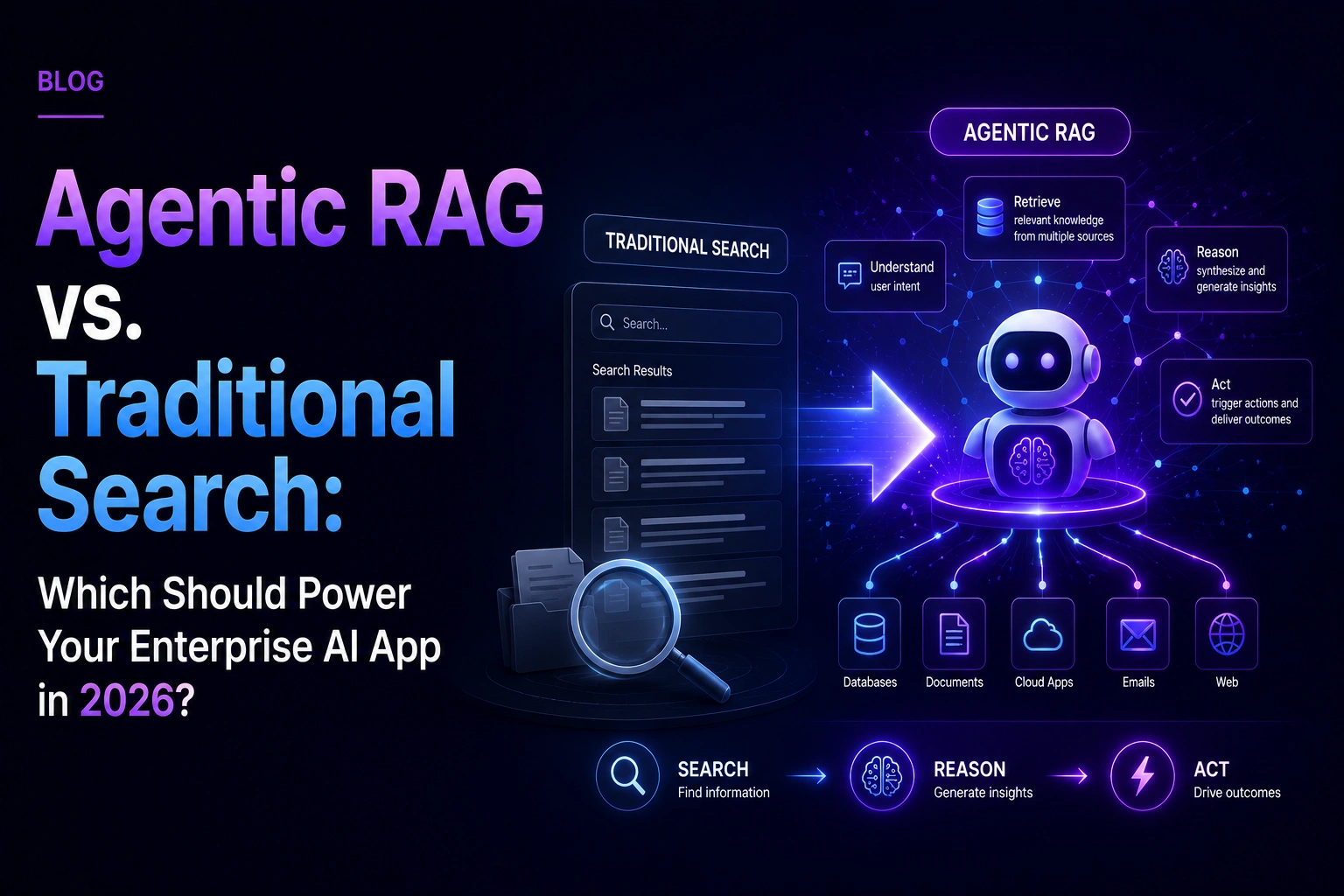
This means clean integrations and grounded data, so agents reason from facts, not guesses. Without this foundation, even the smartest agent is stuck. Wizr’s guide on agentic RAG versus traditional search explains how grounding agents in real data makes them reliable.
In practice, this is often the hardest and most important step. Automotive data lives in dozens of systems, from PLM and MES on the engineering side to ERP, CRM, and dealer platforms on the business side, and much of it is messy or siloed. Getting agents clean, governed, real-time access to the right data is what separates a working deployment from a stalled pilot. Treat this data and integration work as a project in its own right, not an afterthought.
Orchestrate Multi-Step Automotive Workflows
Most automotive tasks span many steps and systems. Scaling agentic AI means orchestrating these multi-step workflows, where specialized agents hand off work to each other under a coordinating agent.
This is where real value shows up, since a single agent rarely finishes a whole process. Strong agentic AI use cases and orchestration turn isolated agents into a coordinated digital workforce that handles end-to-end work. Think of a warranty claim: one agent validates the claim, another checks the part and policy, another updates the ERP, and a supervisor agent keeps the whole flow on track, escalating to a human when needed. That coordination is the difference between a demo and a system that runs the business.
Build Secure, Governed & Human-Supervised AI Workflows
Autonomy without control is a risk, especially in a safety-critical industry. Enterprises must build governance in from the start, with access controls, audit trails, and human oversight for high-stakes actions.
The goal is agents that move fast inside firm limits. Humans stay in control of the decisions that matter, like a warranty payout or a safety-related change. This balance is what makes agentic AI safe to scale in automotive. Define clear autonomy levels for each agent, decide which actions always need a human sign-off, and log everything, so you can prove what every agent did and why. In a regulated, safety-critical industry, this is not optional, it is the foundation of trust.
Measure ROI and Scale Agentic AI Across the Enterprise
Start with one high-value use case, prove the ROI, then expand. Track clear metrics like cost saved, time reduced, and quality improved, so value is provable, not assumed.
Once a use case works, reuse the pattern across other functions. This staged approach is how automotive enterprises scale agentic AI without betting everything on a single big launch. Pick a first use case that is valuable but contained, like dealer support or parts cataloging, where the data is reachable and the impact is easy to measure. A clear early win builds the business case and the internal confidence to go further. Our CIO’s checklist for agentic AI workflow solutions helps you evaluate and plan these rollouts.
How Wizr AI Helps Automotive Enterprises Implement Agentic AI
Wizr AI is a services-led enterprise AI company that helps automotive enterprises turn agentic AI from idea into production. Founded in 2023, Wizr combines enterprise AI services, AI-powered engineering, and governance to deliver real automotive outcomes. Rather than a generic overview, here is how Wizr helps you implement the exact use cases in this guide, mapped to the four capabilities that matter most for automotive.
Enterprise AI Services for Automotive Workflows
Wizr’s Enterprise AI Services team designs and builds AI agents, assistants, and agentic workflows tailored to automotive processes. From dealer support to parts cataloging to customer service, Wizr builds solutions that automate complex, data-heavy workflows and deliver measurable value in weeks, not quarters. This is the hands-on delivery that turns a promising use case into a working system, with consultants and engineers who shape each agent to fit your real processes rather than forcing a generic product onto them.
AI-Powered Engineering & Legacy Modernization
For the engineering side, Wizr accelerates automotive software development and modernizes legacy systems with AI-powered engineering. This helps carmakers build software-defined vehicles faster, modernize older platforms, and cut technical debt, so engineering keeps pace with the market. It directly supports the engineering and software-testing use cases above, giving your teams AI-powered development, automated testing, and modernization of the aging systems that slow new features down.
AI Agents & Agentic Workflows for Enterprise Automation
Wizr builds and deploys AI agents and agentic workflows that connect to the systems automotive teams already use, from SAP and Oracle to dealer and CRM platforms. Its agents handle real actions across customer support, IT, and finance, orchestrating multi-step work with human oversight where it counts. This is the orchestration layer that makes the supply chain, dealer, quality, and back-office use cases real, with specialized agents handing off work under a supervising agent. Wizr’s work in the automotive industry shows this in action, from parts cataloging to dealer support.
AI Governance for Secure & Scalable AI Adoption
Finally, Wizr makes sure agentic AI stays safe as it scales. It is SOC 2 Type II and ISO 27001 compliant and supports GDPR, and its AI governance service gives enterprises one place to see every agent, measure performance and risk, and enforce secure, compliant access. For a safety-critical industry, this governance is essential, since it is what lets you deploy agents across the enterprise without losing control, giving you a single register of every agent and consistent monitoring of cost, accuracy, and risk.
The results speak for themselves. For a leading US automotive manufacturer, Wizr lifted dealer support resolution from around 25 percent to roughly 70 percent, raised customer satisfaction by 28 percent, and delivered about 2.1 million dollars in annual savings. That is agentic AI implemented and running in production, not a pilot. You can talk to the Wizr team to see how agentic AI fits your automotive operations.
Conclusion
Agentic AI is reshaping the automotive industry, from the engineering lab to the factory floor to the dealership. The 10 use cases in this guide show where the value is real today, not someday.
The path forward is clear. Start with one high-value use case, connect agents to your real systems, build governance from the start, prove the ROI, and scale the pattern across the enterprise. Do this, and agentic AI becomes a durable competitive edge rather than another stalled pilot.
The automakers that win in 2026 and beyond will be the ones that treat agentic AI as core infrastructure, not a side experiment. The technology is ready, the use cases are proven, and the early movers are already pulling ahead on cost, speed, and quality. The question is no longer whether to adopt agentic AI, but which workflow to transform first and how fast you can scale from there.
When you are ready to put agentic AI to work across your automotive operations, Wizr AI can help you do it with the services, engineering, and governance to make it last.
FAQs
1. What are the main agentic AI use cases in the automotive industry?
The main agentic AI use cases in the automotive industry span the whole value chain. They include AI-powered engineering and software development, predictive maintenance and production optimization, intelligent quality inspection, supply chain and procurement orchestration, spare parts management, software-defined vehicle testing, customer service automation, dealer and warranty operations, fleet management, and enterprise IT and business process automation. Each uses AI agents that reason, act, and complete multi-step work with human oversight.
The common thread is complex, repetitive, cross-system work, which is most of what an automotive enterprise does. That is where agents deliver the most value.
Wizr AI helps automakers implement these use cases, from dealer support to parts cataloging, with services, engineering, and governance.
2. How is agentic AI different from generative AI in automotive?
Generative AI creates content, like code, a design option, or a dealer email, when prompted. Agentic AI goes further, since it pursues a goal, uses tools, and takes multi-step actions on its own, with people supervising the important decisions. In automotive, generative AI use cases in automotive industry work are often a building block inside an agentic system, where the agent uses generation as one tool and then acts on the result.
So it is not one or the other. Agents put generative AI to work inside real workflows, which is what turns a clever output into a completed task.
Wizr AI builds both into automotive solutions, with agents that reason, generate, and act across your systems.
3. What are the risks of autonomous AI systems in automotive?
The main risks of autonomous AI systems include wrong actions, data exposure, and agents drifting from their intended behavior over time. In a safety-critical industry like automotive, an unchecked agent could make a costly or unsafe decision, which is why governance is essential. The fix is to set clear autonomy levels, require human approval for high-stakes actions like warranty payouts or safety changes, log every action for audit, and monitor agents continuously.
Handled this way, the risks are manageable and the upside is large. Control is what makes autonomy safe.
Wizr AI builds this governance into every deployment, so automakers scale agentic AI safely and compliantly.
4. Where should automotive enterprises start with agentic AI?
Start with one high-value use case where the data is reachable and the impact is easy to measure, like dealer support, parts cataloging, or a back-office process such as finance or IT. These deliver quick, provable wins without the higher risk of factory or safety-critical systems. Prove the ROI there, then reuse the pattern across other functions.
This staged approach builds both the business case and the internal confidence to scale, rather than betting everything on one big launch.
Wizr AI helps automakers pick the right first use case and scale agentic AI across the enterprise from there.
5. How do automotive enterprises measure ROI from agentic AI?
Automotive enterprises measure agentic AI ROI with clear before-and-after metrics tied to each use case. Common ones include cost saved, time or cycle time reduced, resolution or quality rates improved, downtime avoided, and revenue gained. For example, a dealer support agent can be measured on resolution rate, response time, and support cost, while a quality agent is measured on defect and recall rates. Define these metrics before you build, then track them after launch.
The key is provable value, not assumed value. Measuring one workflow first makes the case to expand.
Wizr AI helps automakers tie agentic AI to measurable outcomes, with proven results like faster dealer resolution and major annual savings.
About Wizr AI
Wizr AI helps enterprises build autonomous enterprises and accelerate product and software engineering with practical, production-ready AI. We help organizations automate business workflows, modernize legacy applications and digital platforms, and build intelligent AI solutions.
Our core services include Enterprise AI Services, AI-Powered Engineering & Legacy Modernization, AI Product Engineering, and AI Governance. We also leverage AI Assembly capabilities, including the Agentic AI Framework, Agentic Workflows, Security, and Integrations.
Through our AI solutions, including AI Agents, Pharma & Life Sciences AI, Oracle AI, and Salesforce AI, we help enterprises apply AI across business and technology needs.
See how we can help your enterprise move faster with AI. 👉 Talk to an AI Expert.




![Agentic AI vs AI Agents: Key Differences Every CIO Must Know [2025 Guide]](https://wizr.ai/wp-content/uploads/2025/07/Agentic-AI-vs-AI-Agents.webp)
![Agentic AI vs Traditional Automation: Why Enterprises Shift for Better CX [2025]](https://wizr.ai/wp-content/uploads/2025/06/Agentic-AI-vs-Traditional-Automation.webp)


![11 Real-World AI Agents Examples + Use Cases for Enterprises [2025]](https://wizr.ai/wp-content/uploads/2025/05/AI-Agents-Examples-Use-Cases.webp)