In pharma, a single unresolved quality issue can halt a batch, trigger a recall, or invite an FDA warning letter. That is why corrective and preventive action, or CAPA, sits at the heart of every quality system. And in 2026, the software you use to manage it matters more than ever.
The stakes are real and measurable. CAPA-related investigation failures under 21 CFR 211.192 were cited in roughly one in three FDA drug inspections from early 2023 to mid-2026. Weak CAPA processes are one of the fastest ways to end up on a 483.
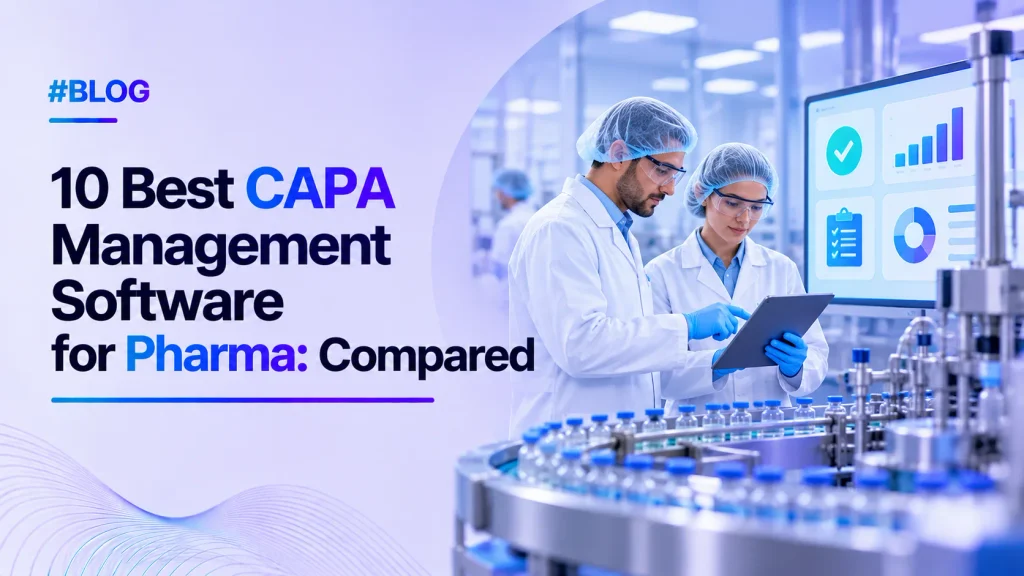
The good news is that CAPA management software has come a long way, with AI now helping teams investigate faster and close CAPAs for good. This guide compares the 10 best CAPA management software for pharma in 2026, so quality and compliance leaders can pick the right fit.
What has changed most is the role of intelligence. For years, a CAPA management system was essentially a system of record: it stored the investigation, tracked the actions, and held the audit trail. In 2026, the leading pharma CAPA management software does more than store the work, it helps do the work, suggesting likely root causes, recommending corrective actions that have worked before, and watching for recurrence after closure. That shift is why choosing the right tool now carries more weight than it did even two years ago. A modern CAPA management software for pharma is no longer just a filing cabinet for quality events, it is an active partner in resolving them.
We keep each profile factual and practical, with clear strengths and best-fit use cases. Whether you need a full quality suite or AI-powered CAPA intelligence, there is an option below for your team.
A quick note on who this is for. These are the top pharma CAPA management solutions quality, compliance, and IT leaders are evaluating this year, from full enterprise CAPA management system platforms to focused, AI-led tools. We have chosen the best CAPA management software 2026 has to offer based on real capabilities, pharma fit, and compliance, not marketing claims. Use it as a practical shortlist, then dig into the ones that match your systems and your goals.
What Is CAPA Management in Pharma?
CAPA management is the structured process pharma companies use to fix quality problems and stop them from coming back. CAPA stands for Corrective and Preventive Action, two linked ideas: correct the issue in front of you, and prevent it from recurring.
In simple terms, a corrective action fixes a problem that already happened, like a batch deviation. A preventive action stops a similar problem before it occurs. Together, they close the loop on quality.

It helps to see where CAPA fits in the bigger picture. A deviation, complaint, out-of-specification result, or audit finding kicks off an investigation. That investigation identifies a root cause, which triggers corrective and preventive actions. Those actions are tracked to completion, then verified through an effectiveness check before the CAPA is formally closed. Every step is documented. This is the CAPA quality management lifecycle, and it is the backbone of a pharma CAPA management process that regulators trust. When any step is skipped or rushed, the whole chain weakens, which is why a well-designed CAPA management software for pharma enforces the sequence rather than leaving it to memory or a spreadsheet.
Why CAPA management matters in pharmaceuticals
Pharma is one of the most regulated industries on earth, and for good reason. A quality failure can affect patient safety, so regulators expect every deviation, complaint, and out-of-spec result to be investigated and resolved.
A strong pharma CAPA management process does three things:
- Finds the real root cause, not just the symptom, so the fix actually works.
- Tracks corrective and preventive actions to completion, with owners and due dates.
- Proves effectiveness, showing regulators the problem will not come back.
Here is the catch. Many pharma teams still run CAPA in spreadsheets or outdated tools, which leads to backlogs, inconsistent investigations, and slow closure. That is exactly why modern CAPA management software, increasingly with AI built in, has become essential.
CAPA management for pharma is not optional, it is a regulatory expectation. The same is true across regulated healthcare, so a strong CAPA management system for healthcare and life sciences organizations is central to staying inspection-ready. Whether you call it a pharma CAPA management system or a CAPA quality management system, the purpose is the same: catch problems, fix them properly, and prove they will not return.
The cost of getting this wrong is not abstract. A weak CAPA process shows up as repeat deviations, aging open items, and investigations that never quite land on the real cause. Inspectors read those patterns quickly, and a cluster of ineffective CAPAs is often what turns a routine inspection into a 483 or a warning letter. On the other side, a disciplined pharma CAPA management process protects supply continuity, keeps products on the market, and frees quality staff from firefighting the same issues again and again. In an industry where a single recall can cost millions and erode trust that took years to build, treating CAPA as a strategic capability rather than a compliance chore is simply good business.
What CAPA management software does
CAPA management software digitizes and automates this whole lifecycle. It captures issues, routes investigations, tracks actions, runs effectiveness checks, and keeps a full audit trail for inspections.
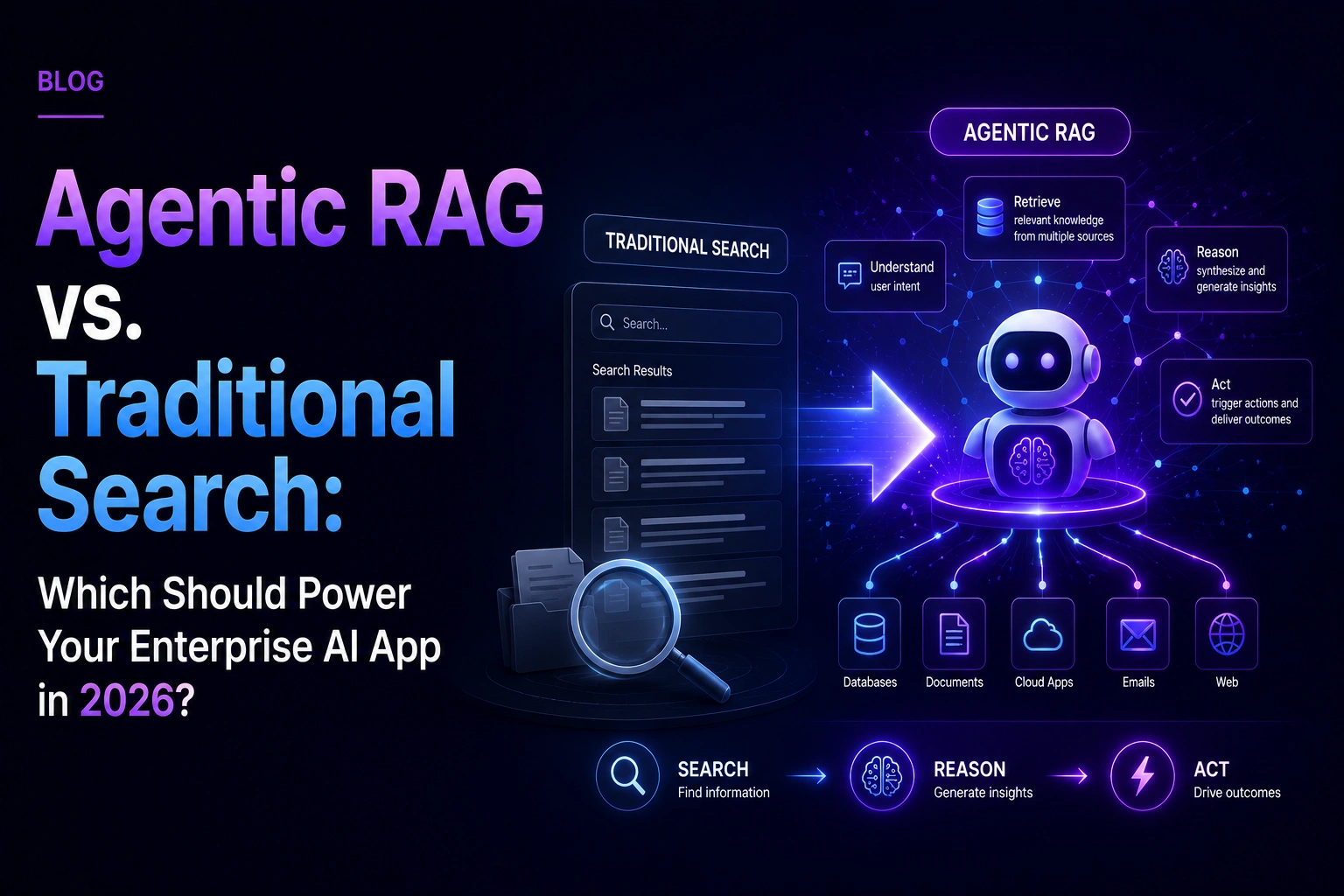
The best tools connect CAPA to the wider quality system, from deviations and complaints to change control and audits. This closed-loop approach is what turns CAPA from a paperwork burden into a real driver of quality. Many modern options are delivered as a cloud-based QMS for CAPA management, which makes them faster to deploy and easier to scale across sites than older on-premises systems. For enterprises grounding AI in their own quality data, Wizr’s guide on agentic RAG versus traditional search explains how AI learns from historical records to deliver reliable insights.
The latest generation adds a layer of intelligence on top of that workflow. An AI CAPA tracking software does not just move a record through its stages, it reads the organization’s history to help teams make better decisions at each one. During investigation, it can point to similar past events and their verified causes. During action planning, it can surface what actually resolved comparable issues. After closure, it can watch the data for early signs that a problem is creeping back. The automation handles the routine, repetitive parts of CAPA, while people focus on judgment, which is exactly how a cloud based CAPA management software should earn its place in a regulated quality program.
10 Best CAPA Management Software for Pharma in 2026: Features and Benefits
Here are the 10 best CAPA management software for pharma in 2026, each reviewed on the same points: what it is, key CAPA features, who it fits, and a practical note. This is not a strict ranking, since the right choice depends on your size, systems, and goals.
The list spans several categories. You will find full pharma quality management system software suites, cloud based CAPA management software built for fast deployment, and AI pharma CAPA management software that adds intelligence to investigations. Several options also serve as a CAPA management system for life sciences more broadly, including biotech and medical devices. In short, the best CAPA management software pharma 2026 has produced covers every size and stage of quality program.
A word on how to read the profiles. Rather than crowning a single winner, think in terms of fit. A global manufacturer running dozens of sites has very different needs from a 30-person biotech preparing for its first inspection, and an enterprise CAPA management system that is perfect for one would be overkill or a poor fit for the other. As you move through the list, weigh three things: the systems you already run and have validated, the size and complexity of your quality operation, and whether your biggest pain is the workflow itself or the speed and consistency of investigations. Keep those in mind, and the right shortlist will narrow itself quickly from the top pharma CAPA management solutions below.
1. MasterControl: CAPA and Quality Management
MasterControl is one of the most established names in pharmaceutical quality management software, founded in 1993. It offers a broad, end-to-end quality suite used by over a thousand regulated companies.
Its CAPA module sits alongside document control, training, change control, audits, complaints, and risk. Newer AI tools, like a Deviation Analyzer and an SOP Generator, help speed up investigations and documentation.
MasterControl’s appeal is breadth and maturity. Used by over a thousand regulated companies across pharma, biotech, and medical devices, it connects quality to manufacturing through its manufacturing excellence tools, so a CAPA can link back to the exact batch and process step. For large manufacturers that want one system of record for the entire quality operation, few tools match its depth. The trade-off is that a suite this comprehensive takes time and budget to roll out fully.
- Key CAPA features: Closed-loop CAPA, deviation analysis, document and training links, risk tools.
- Best for: Mid-to-large pharma and medtech manufacturers wanting a complete QMS.
- Note: A full platform like this can be more than smaller teams need.
2. Wizr AI: AI-Assisted CAPA Management & Intelligence
Wizr AI takes a different approach. Rather than a traditional QMS, Wizr is a services-led enterprise AI company that delivers an AI-powered CAPA Management & Intelligence solution, built to work with the quality systems pharma teams already run.
Wizr applies AI-powered intelligence and automation across the full CAPA lifecycle, from investigation and root cause analysis to corrective actions, effectiveness checks, and closure. It analyzes historical deviations, complaints, and CAPAs to surface likely root causes with supporting evidence, then draws on successfully closed CAPAs and institutional knowledge to recommend corrective actions. Automated effectiveness checks monitor post-closure data for recurrence, while AI-assisted narratives produce consistent, audit-ready documentation with full traceability, all with human review at defined control points.
The results are striking. Wizr reports 60% fewer open CAPAs within six months, 483 observations eliminated through consistent, defensible CAPA execution, and zero recurrences after verified closure. You can see the full offering on Wizr’s CAPA Management and Intelligence solution page.
What sets Wizr apart in this list is focus and flexibility. Rather than asking you to rip out and replace a QMS you have already validated, Wizr adds an AI intelligence layer on top of the systems you run, attacking the three things that actually slow CAPAs down: slow root cause analysis, inconsistent corrective actions, and painful documentation. Because it is delivered as a service shaped around your processes, pharma teams can target their worst CAPA bottleneck first and expand from there. For regulated quality work, the built-in human review at every control point is what makes that AI safe to trust.
- Key CAPA features: AI root cause insights, corrective-action recommendations, automated effectiveness checks, audit-ready narratives.
- Best for: Pharma quality teams that want AI to accelerate investigations on top of existing systems.
- Note: Wizr complements your QMS as an intelligence layer rather than replacing it outright.
3. Veeva Vault QMS: CAPA Management for Life Sciences
Veeva Vault QMS is a cloud-native quality suite built specifically for life sciences, part of the wider Veeva Quality Cloud. It is a popular choice among large global pharma firms.
Its strength is a unified data model that connects QMS, training, document control, and lab quality on one platform. AI agents can generate investigation summaries and translate documents, which helps global teams move faster.
Veeva’s deep roots in life sciences are its biggest draw. The platform is purpose-built for pharma and biotech, with workflows and terminology that match how regulated quality teams actually work, plus strong external partner collaboration for CMOs and suppliers. Many of the world’s largest drugmakers already run other Veeva systems, so adding Vault QMS keeps quality on one connected data model. For smaller or less complex organizations, though, the full suite can be more than they need.
- Key CAPA features: Closed-loop CAPA, unified quality data, AI investigation summaries, partner collaboration.
- Best for: Large, global life sciences companies standardizing quality on one platform.
- Note: Best value comes at enterprise scale, less so for small teams.
4. TrackWise Digital: Enterprise CAPA Management
TrackWise, from Honeywell’s Sparta Systems, is a long-standing enterprise QMS, with TrackWise Digital as its cloud version launched in 2019. It is known for deep configurability and decades of pharma implementation experience.
The platform covers CAPA, complaints, documents, training, audits, supplier quality, and change control. AI features include auto-categorization, auto-summarization, and analytics dashboards for quality trends.
TrackWise has been a staple in enterprise pharma quality for decades, which means a huge base of implementation experience and best practices to draw on. Its configurability lets large organizations model even the most complex, multi-site CAPA processes exactly as their SOPs require. There is also a QuickTrack edition aimed at smaller and growing companies that want TrackWise capability without a heavy build. The flip side of all that flexibility is that complex configurations can lengthen implementation and upkeep.
- Key CAPA features: Highly configurable CAPA workflows, auto-summarization, analytics, supplier quality links.
- Best for: Large pharma and medical device firms with complex, enterprise CAPA needs.
- Note: Its depth and configurability can mean a longer implementation.
5. ETQ Reliance: CAPA and Quality Management
ETQ Reliance, now part of Hexagon, is a cloud-based enterprise quality management system known for flexible, no-code workflow design. It suits teams that want to tailor CAPA processes without heavy coding.
Its CAPA capabilities include a root cause analysis toolkit, no-code configuration, and real-time dashboards. Corrective actions can be launched from any connected quality module, keeping the loop closed.
The no-code angle is ETQ’s real differentiator. Quality teams can adjust CAPA forms, workflows, and escalation rules themselves, without waiting on IT or a vendor, which keeps the system aligned to changing SOPs. Its strong analytics also help teams spot recurring issues across sites before they become systemic. ETQ serves manufacturing broadly, so pharma buyers should confirm the life sciences compliance module fits their specific regulatory needs.
- Key CAPA features: Root cause toolkit, no-code CAPA workflows, real-time dashboards, module integration.
- Best for: Enterprises that want configurable CAPA workflows across quality processes.
- Note: Strongest as part of a broader ETQ quality deployment.
6. ComplianceQuest: CAPA Management Software
ComplianceQuest is a quality management system built natively on the Salesforce platform. That makes it a natural fit for organizations already standardized on Salesforce.
Its CAPA tools include collaborative 5-Why and 8D problem-solving, closed-loop links to complaints, audits, risk, and training, and ICH Q9-aligned risk management. Supplier quality is connected directly to CAPA.
Building on Salesforce brings real advantages: enterprise-grade security, familiar user experience, and easy integration with other Salesforce apps. ComplianceQuest has also leaned into AI, adding generative and agentic features to speed up investigations and documentation. For pharma teams that value structured problem-solving, the collaborative 5-Why and 8D tools keep investigations rigorous and consistent. The main consideration is that its strengths and costs are tied to the Salesforce ecosystem.
- Key CAPA features: 5-Why and 8D tools, closed-loop CAPA, ICH Q9 risk, supplier quality links.
- Best for: Pharma and life sciences teams invested in the Salesforce ecosystem.
- Note: Value depends on your comfort with a Salesforce-based platform.
7. IQVIA SmartSolve: Life Sciences Quality Management
IQVIA SmartSolve is a life-sciences electronic QMS that includes CAPA as part of a broader quality stack. IQVIA positions it for organizations with complex, regulated portfolios.
Its CAPA features include risk-based assessment with severity and probability scoring, plus integration with deviation, complaint, audit, and change management. Post-market surveillance integration is a notable differentiator for commercialized products.
Backed by IQVIA’s deep life-sciences presence, SmartSolve fits organizations that want quality connected to the wider data and services IQVIA provides. Its risk-based CAPA scoring helps teams prioritize the issues that matter most, rather than treating every CAPA the same. The post-market surveillance link is especially useful for companies managing commercialized products across many markets. As a broader eQMS, it is best suited to larger operations with complex, regulated portfolios.
- Key CAPA features: Risk-based CAPA scoring, deviation and complaint integration, post-market surveillance.
- Best for: Life sciences firms wanting CAPA inside a wider IQVIA quality stack.
- Note: Best suited to larger, complex quality operations.
8. Qualio: Cloud-Based QMS for Pharma and Biotech
Qualio is a cloud-first QMS built for growing life science companies, including biotech, medical device, and CRO or CMO firms. It is known for being quick to deploy and easy to use.
It bundles document control, training, supplier, audit, CAPA, change control, and risk management into one tool. Native design control and risk modules make it especially popular with smaller, fast-moving teams.
Qualio’s big selling point is speed and simplicity. Growing life science companies can be up and running in weeks rather than months, with a clean interface that non-specialists can actually use. That lowers the barrier for a startup to run a proper, inspection-ready CAPA process early, instead of waiting until it is large enough for a heavy enterprise suite. The trade-off is that very large, highly complex global operations may eventually outgrow it.
- Key CAPA features: Closed-loop CAPA, risk management, design controls, easy setup.
- Best for: Startups and small-to-mid pharma, biotech, and device companies.
- Note: Designed for growing teams rather than the largest global enterprises.
9. Qualityze: CAPA Management for Quality Systems
Qualityze is a cloud-based enterprise quality management system, also built on the Salesforce platform. It offers strong closed-loop CAPA alongside a full suite of quality processes.
Its CAPA module connects nonconformance, complaints, change, audit, and document management, with structured root cause tools and effectiveness verification. It serves regulated industries including pharma, biotech, and medical devices.
Qualityze is known for a balance of configurability and ease of use, with the security and scalability that come from the Salesforce foundation. Its closed-loop CAPA keeps corrective and preventive actions tied to the originating issue, so nothing gets lost between modules. Built-in effectiveness verification helps teams prove a fix actually worked, which is exactly what inspectors want to see. As with other Salesforce-based options, the best fit is teams comfortable with that ecosystem.
- Key CAPA features: Closed-loop CAPA, root cause tools, effectiveness checks, broad quality suite.
- Best for: Regulated firms wanting a configurable, cloud-based CAPA quality management system.
- Note: Like other Salesforce-based tools, fit depends on your platform preference.
10. SimplerQMS: CAPA Management for Regulated Industries
SimplerQMS is a cloud-based QMS purpose-built for life sciences, including pharma, biotech, and medical devices. Its appeal is out-of-the-box compliance and ease of use.
The platform includes CAPA, document control, training, change, and audit management, fully validated and aligned to FDA 21 CFR Part 11, ISO, and GxP requirements. That makes it a strong fit for smaller regulated teams that want compliance built in, including CAPA management software for medical devices as well as pharma.
SimplerQMS lives up to its name by removing much of the setup burden. Because it ships fully validated and pre-configured for life sciences standards, teams spend less time building compliance and more time running quality. CAPA connects to document control and training, so a corrective action can automatically trigger an SOP update or a retraining task. For smaller regulated firms that need to be inspection-ready without a large quality IT team, that out-of-the-box approach is a real advantage.
- Key CAPA features: Validated CAPA workflows, document and training links, built-in GxP compliance.
- Best for: Small-to-mid life sciences companies wanting ready-to-use compliance.
- Note: Focused on core QMS rather than deep enterprise customization.
CAPA Management Software Comparison: Which Solution Fits Pharma Best?
No single tool is best for everyone. The right CAPA management software for pharma depends on your size, your existing systems, and whether you want a full QMS or an AI intelligence layer. Here is a side-by-side view.
| Software | Type | Best For | Standout Strength |
|---|---|---|---|
| MasterControl | Full QMS | Mid-to-large pharma and medtech | Complete, mature quality suite |
| Wizr AI | AI CAPA intelligence and services | Teams adding AI to existing QMS | AI root cause and effectiveness checks |
| Veeva Vault QMS | Life sciences QMS | Large global pharma | Unified life sciences data model |
| TrackWise Digital | Enterprise QMS | Complex enterprise CAPA | Deep configurability |
| ETQ Reliance | Enterprise QMS | Configurable workflows | No-code CAPA design |
| ComplianceQuest | Salesforce QMS | Salesforce-based teams | 5-Why and 8D problem solving |
| IQVIA SmartSolve | Life sciences eQMS | Complex portfolios | Post-market surveillance |
| Qualio | Cloud QMS | Startups and SMBs | Fast, easy deployment |
| Qualityze | Salesforce QMS | Regulated cloud QMS buyers | Closed-loop CAPA suite |
| SimplerQMS | Life sciences QMS | Small-to-mid regulated firms | Built-in GxP compliance |
The pattern is clear. Full QMS platforms give you everything in one place, Salesforce-based tools fit teams already on that ecosystem, lighter cloud tools suit smaller firms, and AI-led solutions like Wizr focus on making investigations faster and CAPAs stick. Many pharma companies pair a core QMS with an AI intelligence layer to get the best of both.
It is worth being honest about the trade-offs behind that table. A comprehensive suite reduces the number of vendors you manage, but it concentrates risk in one long, costly implementation and can be slow to change. A lighter cloud tool deploys in weeks, but a fast-growing company may outgrow it. A Salesforce-based system is powerful if you already live in that ecosystem and expensive to justify if you do not. An AI intelligence layer delivers the quickest win on investigation speed and recurrence, but it works best alongside a solid underlying QMS rather than on its own. There is no universally best answer, only the best fit for your systems, your scale, and the specific CAPA bottleneck you most need to solve this year.
For teams weighing these options, it helps to understand why AI projects stall in the first place. Wizr’s guide on why enterprise AI apps fail and how to fix them covers the pitfalls to avoid when adding AI to a regulated workflow like CAPA.
Essential CAPA Management Software Features for Pharmaceutical Quality Teams
Whatever tool you choose, certain features separate a strong CAPA management system from a basic one. Here are the capabilities pharmaceutical quality teams should insist on.
Root Cause Analysis and CAPA Investigation Management
Everything starts with finding the real root cause. Good software provides structured tools like 5-Why, fishbone, and 8D to guide investigations, so teams do not just treat symptoms.
The best modern tools go further with AI. An AI CAPA tracking software can analyze historical deviations and CAPAs to suggest likely root causes and surface supporting evidence, which speeds up investigations and improves consistency across sites. This is where CAPA management with AI delivers its biggest early win.
This matters because investigations are where most CAPAs stall. FDA data shows the share of drug inspections citing the top investigation category rose from about one in five in 2023 to roughly one in four in 2025, a sign that manual investigation processes are not keeping up. AI that helps teams get to the right root cause faster directly attacks this problem. The wider shift is clear too: Gartner expects 40% of enterprise applications to include task-specific AI agents by the end of 2026, up from less than 5% in 2025, and pharma quality is one of the areas adopting fast.
When you evaluate a tool here, look past the checklist of methods and ask how the investigation actually flows. Can an investigator pull up similar historical events in a click, rather than searching across disconnected systems? Does the tool capture the reasoning behind a root cause, not just the final label, so a reviewer or an inspector can follow the logic? Can it distinguish a true systemic cause from a one-off human error, and route the two differently? These are the details that separate a CAPA management with AI that genuinely accelerates work from one that just adds another screen. The best investigation management keeps the structure rigorous while removing the manual drudgery that makes teams cut corners under deadline pressure.
Corrective and Preventive Action Tracking
Once you know the cause, you need to track every corrective and preventive action to completion. Strong pharma corrective and preventive action software assigns owners, sets due dates, and sends reminders, so nothing slips through the cracks.
Look for clear dashboards that show open CAPAs, overdue actions, and bottlenecks at a glance. This visibility is what keeps backlogs under control and gives quality leaders confidence heading into an audit.
Tracking is also where a CAPA quality management system earns its keep day to day. Strong tools escalate automatically when an action slips past its due date, so an overdue item lands on a manager’s desk instead of quietly aging in a queue. They tie each corrective and preventive action back to its originating event, so nothing becomes an orphaned task with no clear purpose. And they give leadership a portfolio view across sites and product lines, which turns CAPA from a reactive scramble into a managed program. For a quality director, the real value of good tracking is predictability: knowing at any moment how many CAPAs are open, which are at risk, and where the process is getting stuck, long before an inspector asks the same questions.
CAPA Effectiveness Checks and Closure
A CAPA is not done when the action is complete. It is done when you can prove the problem will not return. Effectiveness checks are how you verify that, and regulators increasingly expect them.
The best tools automate this step, monitoring post-closure data for signs of recurrence. AI-powered effectiveness checks can flag a returning issue early, long before it becomes another deviation, which is central to a reliable CAPA quality management system.
This is the step teams most often shortchange, and inspectors know it. Closing a CAPA because the planned action was completed is not the same as proving the action worked. A genuine effectiveness check defines, up front, what success looks like and how it will be measured, then verifies it against real data over a defined period. Good software makes that discipline the default rather than an afterthought, scheduling the check at closure and holding the CAPA open until the evidence is in. When AI monitors the relevant data continuously, the organization no longer relies on someone remembering to look back in three months. It gets an early warning the moment a trend turns, which is the difference between preventing a recurrence and investigating the same failure twice.
Audit Trails, Documentation, and Regulatory Traceability
In pharma, if it is not documented, it did not happen. Every CAPA needs a complete, tamper-evident audit trail and documentation that traces back to source deviations, risk classifications, and regulatory requirements.
Strong CAPA software generates this automatically and keeps it inspection-ready. AI-assisted narratives can even draft consistent documentation for human review, cutting hours of manual writing while improving quality and traceability.
The quality of that documentation is often what an inspection turns on. Two investigations can reach the same correct conclusion, yet one sails through review while the other draws questions, purely because of how clearly the story is told. Strong CAPA management software for pharma enforces a consistent structure, links every statement back to its source record, and locks the audit trail so changes are visible and attributable under ALCOA+ principles. AI-assisted drafting pushes this further by producing a clean first version that follows the same format every time, which reviewers then refine rather than write from scratch. The result is documentation that is faster to produce and easier to defend, with a single traceable thread running from the original deviation through to verified closure.
Pharma CAPA Management Software Compliance: What to Evaluate
Compliance is non-negotiable in pharma, so your CAPA software must meet strict regulatory standards. Before you buy, check how each tool handles the requirements that matter most to regulators and auditors.
There is a practical reason to treat this as a buying criterion rather than a box to tick later. Validation and compliance work is expensive and slow, so a tool that ships pre-validated and pharma-ready can save months compared with one you have to configure and validate from the ground up. Ask vendors for their validation documentation, their approach to change control when the software updates, and evidence of how other regulated customers have used the system in real inspections. A credible pharma quality management system software vendor will have clear answers and references. A vague one is a warning sign, because in a GxP environment the burden of proving the system is fit for purpose ultimately falls on you.
Here is what to evaluate on the compliance front:
- FDA 21 CFR Part 11. The software must support electronic records and signatures, with audit trails and access controls.
- GxP and validation. Look for GMP, GLP, and GCP alignment, and confirm the vendor provides validation support or pre-validated software.
- Data integrity (ALCOA+). Records should be attributable, legible, contemporaneous, original, and accurate, with no gaps.
- Global regulatory reach. For global firms, confirm support for EMA, ICH, and other regional requirements, not just the FDA.
- Security certifications. Check for SOC 2 Type II, ISO 27001, and GDPR compliance to protect sensitive data.
- Traceability and inspection readiness. The tool should make it easy to pull a complete, linked record for any CAPA during an audit.
A quick word of caution. Many vendors claim AI features, so ask exactly what the AI does, how it is governed, and whether a human stays in control of regulated decisions. In a safety-critical industry, governed AI is the only kind worth deploying. Wizr’s work on AI governance shows how enterprises keep AI secure, compliant, and auditable as they scale.
Integration is the other factor teams underrate. Your CAPA tool does not live alone, it has to connect to your ERP, LIMS, document systems, and other quality modules. A tool that integrates cleanly gives you one connected quality record, while a disconnected one creates data silos and gaps that auditors notice. For teams modernizing or connecting these systems, Wizr’s AI-powered engineering and legacy modernization services handle exactly this kind of integration work. The goal is a single, traceable thread from the first deviation to verified closure, no matter how many systems it touches.
How Wizr AI Supports CAPA Management and Quality Investigations in Pharma
Most tools in this guide manage the CAPA workflow. Wizr AI focuses on making the hardest parts of that workflow faster and more reliable, using AI to support investigations, recommendations, and documentation. As a services-led enterprise AI company, Wizr delivers this as a solution tailored to your quality systems, not a one-size-fits-all product.
The distinction matters for a buyer. Most entries in this guide answer the question “where do we run our CAPA process?” Wizr answers a different one: “how do we make the CAPA process we already run faster, more consistent, and less painful?” That is why Wizr sits comfortably alongside the QMS platforms above rather than competing head-on with them. If your workflow is sound but your investigations drag, your corrective actions vary by analyst, and your documentation eats hours, Wizr targets exactly those three failure points. Here is how Wizr’s CAPA Management & Intelligence solution maps to the real work of pharma quality teams.
AI-Assisted Root Cause Insights from Historical CAPA Data
Root cause analysis is where many CAPAs stall. Wizr’s AI analyzes historical deviations, complaints, and CAPAs to identify potential root causes and surface the supporting evidence behind them.
Instead of starting each investigation from scratch, teams get data-driven insights drawn from the organization’s own quality history. This speeds up investigations and brings consistency across sites, which is exactly where cross-site quality programs tend to struggle. Wizr builds these capabilities through its Enterprise AI Services, designed around your specific workflows.
Crucially, these are insights, not verdicts. Wizr’s AI surfaces candidate root causes with the evidence behind each one, then leaves the determination to the investigator. That design keeps the human firmly in charge of a regulated decision while still cutting the hours spent hunting through old records and reconstructing what happened last time. For a quality team running the same investigation patterns across multiple sites, the payoff is twofold: faster time to a defensible root cause, and far less variation in how two analysts in two locations reach it. Because the AI learns from your own closed CAPAs, the insights get sharper as your history grows, rather than staying static like a generic rules engine.
Corrective-Action Recommendations and Effectiveness Checks
Finding the cause is only half the job. Wizr draws on successfully closed CAPAs and institutional knowledge to recommend corrective actions that have worked before, helping teams act faster and more consistently.
After closure, automated effectiveness checks monitor post-closure data for signs of recurrence. If a problem starts to return, the system flags it early, which is how Wizr helps customers reach zero recurrences after verified closure. This same continuous-monitoring approach runs across Wizr’s wider quality work, including its Electronic Batch Record Intelligence solution, which watches batch parameters to surface emerging trends and potential deviations before they turn into CAPAs. The result is a quality program that catches problems earlier, not just records them after the fact.
CAPA Documentation and Traceability Support
Documentation is where quality teams lose the most time, and where auditors look hardest. Wizr’s AI-assisted narratives help teams create consistent, audit-ready documentation with traceability to source deviations, risk classifications, and applicable regulatory requirements.
Human review stays embedded at defined control points, so experts keep control of every regulated decision. The payoff is real: Wizr reports 60% fewer open CAPAs within six months and 483 observations eliminated through consistent, defensible CAPA execution.
This documentation support is also where the service-led model shows its value. Rather than handing you a tool and a manual, Wizr shapes the AI around your SOPs, your templates, and your regulatory context, so the narratives it drafts match how your quality system already writes. Human review stays embedded throughout, which means the output is not just faster to produce but built to withstand scrutiny. Wizr is SOC 2 Type II and ISO 27001 compliant and supports GDPR, and its broader pharma work spans regulatory, quality, and safety operations, including its AI-native eCTD authoring and assembly solution. You can see the approach in action in this accelerated eCTD preparation case study with a global pharmaceutical manufacturer, or talk to the Wizr team to see how this fits your quality operations.
Conclusion
CAPA management is too important to leave to spreadsheets or outdated tools. In 2026, the best CAPA management software for pharma combines solid quality workflows with AI that helps teams investigate faster, act smarter, and close CAPAs for good.
The right choice depends on your needs. A full QMS like MasterControl, Veeva, or TrackWise fits large, complex operations. Lighter cloud tools like Qualio or SimplerQMS suit smaller teams. And an AI-led solution like Wizr AI helps any pharma team cut CAPA backlogs, prevent recurrence, and stay inspection-ready.
A useful way to decide is to start from your biggest problem, not the longest feature list. If you lack a connected quality system at all, invest in a QMS that fits your scale. If you have a capable QMS but your investigations drag, your corrective actions vary from analyst to analyst, and your documentation consumes hours you do not have, the fastest return comes from adding AI intelligence on top of what you already run. Whichever path you choose, insist on the fundamentals that regulators care about: rigorous root cause analysis, reliable action tracking, genuine effectiveness checks, and complete, traceable documentation under 21 CFR Part 11 and GxP.
Whatever tool anchors your quality system, the winning move in 2026 is to add AI where it pays off most: root cause analysis, effectiveness checks, and documentation. When you are ready to bring AI-powered intelligence to your CAPA process, Wizr AI can help you do it with the solution, engineering, and governance to make it last.
FAQs
1. What Is CAPA Management and How Does a CAPA Management System Work?
CAPA management is the structured process of identifying, investigating, fixing, and preventing quality problems, and a CAPA management system is the software that runs it. The system manages the full lifecycle of corrective and preventive actions, from capturing an issue to verifying the fix worked. In pharma, it is a core part of staying compliant and protecting patient safety.
The goal is a closed loop: find the root cause, act on it, and prove it will not come back. A good CAPA management system moves each event through investigation, action, effectiveness check, and closure in a fixed sequence, assigning owners and due dates along the way and keeping a complete, tamper-evident audit trail of every step for inspections. That structure is what makes the process repeatable and defensible rather than dependent on any one person’s memory.
Wizr AI supports this with an AI-powered CAPA Management & Intelligence solution that speeds up investigations, recommends proven corrective actions, and strengthens closure, all while keeping human experts in control of regulated decisions.
2. How Does CAPA Software Differ from QMS Software?
CAPA software focuses specifically on managing corrective and preventive actions, while a quality management system, or QMS, is the broader platform that manages all quality processes. A QMS typically includes CAPA alongside document control, training, audits, change control, and complaints. So CAPA is one module within a full QMS.
In practice, most pharma companies use CAPA as part of a wider QMS, since quality processes are deeply connected. A deviation feeds an investigation, a complaint may trigger a CAPA, and a corrective action might drive a change control or a document update, so keeping them in one connected system avoids the gaps that auditors notice. Some companies also add an AI layer, like Wizr, to make CAPA investigations faster and more reliable without disturbing the QMS underneath.
Wizr AI works alongside your existing QMS, adding AI intelligence to the CAPA process rather than replacing your quality platform. That means you keep the system you have already validated and simply make its hardest steps quicker and more consistent.
3. What Should Pharma Companies Look for in CAPA Management Software?
Pharma companies should look for strong root cause analysis tools, reliable action tracking, automated effectiveness checks, and complete audit trails. Compliance is essential, so confirm support for FDA 21 CFR Part 11, GxP, data integrity, and relevant security certifications. Integration with your existing quality and enterprise systems matters too.
Increasingly, AI is a differentiator. Look for tools that use AI to surface root causes, recommend proven corrective actions, and draft audit-ready documentation, always with human oversight for regulated decisions. Ask vendors precisely what the AI does, how it is governed, and whether it learns from your own quality history or runs on a generic model, because those answers predict how much value you will actually see.
Wizr AI delivers exactly this kind of governed, AI-assisted CAPA support, built around your systems and your compliance needs.
4. What Is the Best CAPA Management Software for Pharma in 2026?
There is no single best CAPA management software for pharma in 2026, because the right choice depends on your size, your existing systems, and your biggest pain point. For large, complex operations, full suites like MasterControl, Veeva Vault QMS, and TrackWise Digital lead the field. For smaller and fast-growing teams, cloud tools like Qualio and SimplerQMS offer quick, inspection-ready deployment. Teams already on Salesforce often favor ComplianceQuest or Qualityze.
If your workflow is solid but investigations are slow and CAPAs keep recurring, an AI-led solution like Wizr AI is the strongest complement, since it layers AI root cause insights, corrective-action recommendations, and effectiveness monitoring on top of the QMS you already run. Many pharma companies land on a combination: a core QMS for the workflow, plus an AI intelligence layer for speed and consistency.
5. How Does AI Improve CAPA Management in Pharma?
AI improves CAPA management by attacking the three steps that slow pharma quality teams down most: root cause analysis, corrective-action planning, and documentation. An AI pharma CAPA management software reads historical deviations, complaints, and closed CAPAs to suggest likely root causes with evidence, recommend actions that resolved similar issues before, and draft consistent, audit-ready narratives for human review. After closure, it can monitor data continuously and flag early signs of recurrence.
The key is governance. In a safety-critical industry, AI should assist rather than decide, keeping a qualified human in control at every regulated control point. Done this way, CAPA management with AI cuts investigation time and backlog while making closure more defensible, which is the approach Wizr AI takes with its CAPA Management & Intelligence solution.
About Wizr AI
Wizr AI helps enterprises build autonomous enterprises and accelerate product and software engineering with practical, production-ready AI. We help organizations automate business workflows, modernize legacy applications and digital platforms, and build intelligent AI solutions.
Our core services include Enterprise AI Services, AI-Powered Engineering & Legacy Modernization, AI Product Engineering, and AI Governance. We also leverage AI Assembly capabilities, including the Agentic AI Framework, Agentic Workflows, Security, and Integrations.
Through our AI solutions, including AI Agents, Pharma & Life Sciences AI, Oracle AI, and Salesforce AI, we help enterprises apply AI across business and technology needs.
See how we can help your enterprise move faster with AI. 👉 Talk to an AI Expert.




![Agentic AI vs AI Agents: Key Differences Every CIO Must Know [2025 Guide]](https://wizr.ai/wp-content/uploads/2025/07/Agentic-AI-vs-AI-Agents.webp)
![Agentic AI vs Traditional Automation: Why Enterprises Shift for Better CX [2025]](https://wizr.ai/wp-content/uploads/2025/06/Agentic-AI-vs-Traditional-Automation.webp)


![11 Real-World AI Agents Examples + Use Cases for Enterprises [2025]](https://wizr.ai/wp-content/uploads/2025/05/AI-Agents-Examples-Use-Cases.webp)