Businesses seeking to improve their products and services need to analyze customer feedback, but traditional methods often fail to capture what consumers truly think. NLP Sentiment Analysis for Customer Feedback is a modern tool that helps companies better understand customer feedback. Specifically, Natural Language Processing Sentiment Analysis enables businesses to interpret client feedback using NLP-based tools without the need for biased responses or face-to-face interviews.
This technology relies on sophisticated NLP Algorithms for Sentiment Analysis and models to go beyond surface-level text and identify emotions, opinions, and hidden patterns in data. By detecting satisfaction levels in product reviews or identifying anger in support tickets, Real-Time Sentiment Analysis with NLP for Customer Feedback provides actionable insights into customer sentiment, enabling organizations to make customer-focused decisions based on up-to-date information. This blog post will explore the challenges of Sentiment Analysis in NLP and why it is essential for businesses to understand customer feedback today.
NLP sentiment analysis is changing how businesses understand customer feedback – making it faster, smarter, and way more actionable.
From spotting trends to detecting churn signals, this guide shows how sentiment aware AI turns raw text into real-time insight.
Read the full post to see how enterprises are using NLP sentiment analysis to boost CX and decision-making.
Why Natural Language Processing (NLP) Is Essential for Feedback Analysis
Natural Language Processing (NLP) is essential for customer feedback analysis because it enables machines to interpret and understand unstructured text at scale – extracting sentiments, emotions, and themes from diverse customer inputs like reviews, surveys, and social media. NLP automates the analysis of large volumes of qualitative data, allowing companies to derive insights in real time and respond faster.
According to IBM, NLP techniques can help businesses analyze over 80% of unstructured customer data that would otherwise go unused. A Salesforce study revealed that 66% of customers expect companies to understand their unique needs, which NLP helps address through contextual sentiment detection. Companies using NLP-powered sentiment analysis have seen up to a 25% increase in customer retention by identifying issues before escalation.
Customer feedback is present across various channels, including emails, social media, reviews, and surveys, making its way into today’s digital landscape. Unfortunately, manually analyzing this data is impractical and error-prone due to its unstructured nature and sheer volume. This is where NLP for Customer Feedback Analysis comes into play. NLP Text Analytics enables machines to comprehend, interpret, and analyze human language, simplifying the process of extracting valuable insights from customers’ opinions.
With Text Mining for Customer Feedback Sentiment, businesses can identify patterns, spot recurring issues, and understand the true sentiments of their customers. This helps pinpoint key areas needing attention by analyzing thousands of comments posted on websites every day. Advanced Sentiment Analysis for Customer Feedback proves invaluable in reducing the time required for this task. It ensures that companies can respond promptly and effectively, whether addressing issues that are usually hidden or identifying new opportunities from customer feedback. Ultimately, regardless of how complex the language may be or where it originates, the goal is always to enhance the customer experience.
What Is Sentiment Analysis and How NLP Enhances It
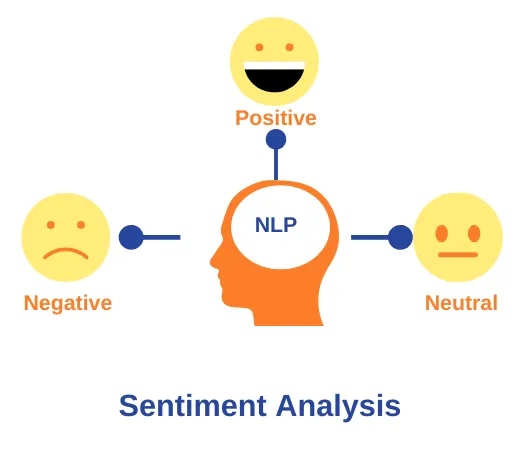
Sentiment Analysis in NLP involves determining the emotions expressed in text, such as positivity, negativity, or neutrality. This helps companies understand what customers think about their products, services, or brand in general. However, traditional sentiment analysis techniques, which rely on simple keyword matching, often overlook the subtleties of language that humans use in speech, such as sarcasm, slang, and context.
At this point, Natural Language Processing in Sentiment Analysis is making significant advances. NLP Models for Sentiment Analysis use complex models, including AI Sentiment Analysis Models and machine learning, to understand the context and tone of feedback. For example, even with similar wording, NLP can distinguish between an irritated complaint and constructive criticism.
Additionally, it can detect emotions, providing deeper insights into the intensity and nature of a customer’s feelings. The improvement of Sentiment Analysis Using NLP for Customer Feedback helps businesses gain more accurate information about customers’ perspectives, leading to actionable findings such as identifying areas for service improvement or using positive feedback to strengthen customer trust. In simpler terms, NLP makes sentiment analysis both faster and more reliable, offering deeper insights. To learn more, explore how the role of NLP in generative AI enhances language understanding and emotion detection in enterprise applications.

How Does NLP Work in Sentiment Analysis?
NLP Sentiment Analysis for Customer Feedback leverages Natural Language Processing in Sentiment Analysis to transform raw text into structured insights. By applying NLP Models for Sentiment Analysis and advanced NLP Algorithms for Sentiment Analysis, businesses gain a better understanding of customer emotions. Here’s how Sentiment Analysis Using NLP for Customer Feedback works:
Treatment of Text: The first step in Text Mining Using NLP involves cleaning the text by removing irrelevant elements like punctuation marks, special characters, stop words, and extra spaces. This preparation is vital for NLP Text Analytics to deliver accurate results.
Tokenization: After cleaning, texts are divided into smaller components like words or phrases using NLP Models for Text Classification. This process enables efficient analysis of individual units of feedback..
Part-of-Speech (POS) Tagging: This step involves assigning grammatical labels to words, aiding Natural Language Processing Sentiment Analysis in understanding sentence structures. For instance, it helps differentiate “good” as an adjective or a noun in the context of the feedback.
Sentiment Scoring: Using NLP for Sentiment Analysis, models assign sentiment scores to words or phrases. These scores, based on emotional weight, help determine whether feedback is positive, negative, or neutral. Emotion Analysis NLP also identifies complex states such as frustration, happiness, or sadness.
Context Analysis: Advanced NLP Text Mining tools analyze relationships between words to infer subtle meanings. For example, phrases like, “The product is amazing, but the delivery was awful,” are assessed for mixed sentiments through Emotion Detection in NLP.
Aggregation: The final step of Advanced Sentiment Analysis with NLP involves summing up sentiments from individual sentences to determine the overall tone. Whether positive, negative, or neutral, this aggregation is crucial for insights into customer feedback.
Key Benefits of NLP Sentiment Analysis for Customer Feedback
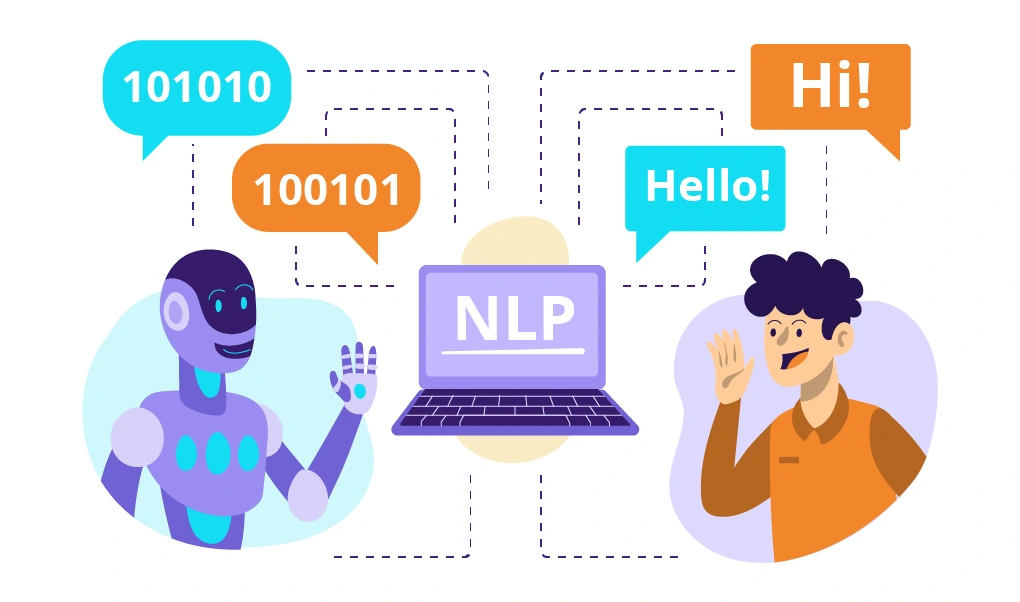
NLP Sentiment Analysis for Customer Feedback provides numerous benefits that significantly change how businesses manage client responses. Below are the main advantages of aligning Natural Language Processing in Sentiment Analysis with customer feedback analysis, from improved accuracy to faster insights:
Scalability
One of the key advantages of NLP Models for Sentiment Analysis is its ability to process large amounts of data at once. This includes processing thousands of social media posts, reviews, or survey responses within seconds, enabling businesses to track sentiment across multiple channels. This ensures that businesses of any size can effectively monitor and respond to customer sentiment in real-time using Text Mining for Customer Feedback Sentiment. For more details on actionable insights and tools, see text mining software.
Precision
Traditional approaches to sentiment analysis usually rely on basic keyword detection, which can wrongly interpret the context or tone of communication. In contrast, NLP for Sentiment Analysis digs deeper to understand what lies beneath the words, including contextual understanding, mood awareness, and nuances in customer language. This comprehension facilitates the correct classification of emotions, allowing businesses to make better decisions about how their customers feel.
Real-Time Insights
With Real-Time Sentiment Analysis with NLP for Customer Feedback, companies can immediately monitor customer attitudes. They can measure shifts in mood through instant messaging with consumers on their website, track social media mentions, or turn negative feedback into opportunities. This instant response leads to proactive customer engagement, as opposed to reactive customer service.
Enhanced Customer Experience
By recognizing repetitive pain points in negative feedback about a product or service, companies can quickly and easily address these issues using NLP Text Analytics. For example, if customers repeatedly mention a problem with a particular feature, companies can take steps to resolve the issue, thereby enhancing the overall customer experience through Advanced Sentiment Analysis with NLP.
Actionable Data
Unstructured data, such as customer reviews or social media comments, can be too vast to analyze manually. Sentiment Analysis Using NLP for Customer Feedback turns this unorganized information into usable insights. When sentiments are grouped together and trends are highlighted, teams can more easily identify areas that require attention during decision-making, basing their actions on facts rather than guesswork. This leads to better strategic decisions, improved targeting, and overall enhanced business performance.
Cost Efficiency
Manual sentiment analysis is time-consuming and resource-draining, as significant amounts of information must be processed and interpreted before a conclusion is reached. Applying NLP Algorithms for Sentiment Analysis to feedback analysis helps save time and allows businesses to focus more effort on other important areas. While customer complaints vary, Natural Language Processing Sentiment Analysis allows businesses to manage them instantly, making the process more cost-effective.
Emotion Detection
Beyond the typical classification of feedback into positive, negative, or neutral, Emotion Analysis NLP also detects additional emotions such as anger, happiness, sadness, or neutrality. This improves both product delivery and customer relations. For example, excitement can be valuable for leveraging public opinion in marketing, while early detection of customer frustration can help prevent unnecessary escalations through Sentiment Extraction Using NLP.
Improved Decision-Making
Natural Language Processing Techniques for Sentiment provide businesses with a better understanding of how customers feel about different company operations. This enables data-driven decision-making regarding service delivery. NLP Models for Text Classification empower companies to make improvements that could boost customer loyalty and retention, such as enhancing customer service protocols or developing new product features.
Use Cases of NLP Sentiment Analysis for Customer Feedback
NLP Sentiment Analysis for Customer Feedback is a versatile tool in customer feedback management that helps organizations gain a better understanding of their clients. Below are some key use cases of Sentiment Analysis Using NLP for Customer Feedback:
- Monitoring Social Media Sentiment with NLP
Companies often use NLP Sentiment Analysis for Customer Feedback to understand public perception of their brands on social media platforms. By analyzing tweets, comments, and posts, businesses can detect patterns, address customer issues, and respond proactively, improving customer loyalty when positive mentions are identified. - Improving Product and Service Offerings with NLP Models
Organizations use NLP Models for Sentiment Analysis to identify recurring problems or successful features based on customer reviews and feedback. For instance, if a product is frequently associated with poor usability, NLP Text Analytics can pinpoint areas of improvement for better customer experiences. - Enhancing Customer Support with NLP Algorithms
NLP Algorithms for Sentiment Analysis help customer service representatives prioritize their work queue based on the emotional tone of interactions. Tickets with highly negative sentiment can be escalated for quicker resolution, improving customer satisfaction and support efficiency. - Survey Analysis with NLP Text Mining
NLP for Sentiment Analysis has simplified the analysis of open-ended survey responses by grouping sentiments and identifying common themes. This process, powered by Text Mining Using NLP, allows companies to gain valuable insights without the need to manually read through every response. - Competitor Benchmarking Using NLP Sentiment Analysis
By analyzing public feedback on various brands, businesses can assess their strengths and identify areas for improvement. Sentiment Analysis Natural Language Processing makes competitor benchmarking more insightful by highlighting trends and emotions expressed across multiple platforms. - Real-Time Crisis Management with NLP Sentiment Analysis
Real-Time Sentiment Analysis with NLP for Customer Feedback enables businesses to identify instances where customers are expressing negative sentiments about a company’s products or services. This helps in intervening quickly and addressing potential issues in real-time. - Personalized Marketing with NLP Sentiment Analysis
By understanding consumer moods and emotions, Emotion Analysis NLP allows companies to tailor marketing messages that resonate with specific customer segments. Sentiment Extraction Using NLP empowers businesses to craft more personalized campaigns, improving overall customer experience.
Challenges in NLP Sentiment Analysis and How to Overcome Them

While Sentiment Analysis in NLP has some challenges, it is still a very powerful tool. Several challenges must be addressed if businesses are to realize its full potential. For example, businesses need to overcome a range of issues, from the use of contextualized language to processing disparate data sources. Some of the common challenges include the following:
Understanding Context and Nuance
Challenge: NLP struggles to properly understand context, particularly with sarcasm and ambiguous statements. For example, the statement “Great job ruining my day” might be wrongly classified as positive without understanding the context.
Solution: Use more advanced NLP Models for Sentiment Analysis, such as deep learning-based or transformer architectures like BERT, which are designed to detect and analyze contextual subtleties.
Handling Multilingual Feedback
Challenge: Customer feedback often comes in different languages, which poses a problem for NLP Sentiment Analysis for Customer Feedback systems that are specifically trained on a single language.
Solution: To ensure accurate Sentiment Analysis Using NLP for Customer Feedback across multiple languages, use multilingual NLP Models for Sentiment Analysis or language-specific training datasets.
Dealing with Domain-Specific Language
Challenge: Industry-specific jargon or slang may confuse general-purpose NLP Algorithms for Sentiment Analysis tools.
Solution: Train specialized NLP Models for Text Classification using datasets that are specific to a particular industry in order to better understand domain-specific language and sentiment.
Classifying Mixed Sentiments
Challenge: Some feedback contains both positive and negative sentiments, making it difficult to analyze. For example, “I love the product, but the shipping was terrible.”
Solution: Classify feedback based on individual sentences or phrases rather than analyzing the entire feedback as a whole, using fine-grained Emotion Detection in NLP and Sentiment Extraction Using NLP.
Data Imbalance
Challenge: Imbalanced sentiment distributions across positive, negative, or neutral categories can lead to poor model performance during training.
Solution: Implement data augmentation methods or gather more data samples to ensure the training dataset has a balanced sentiment distribution for Best Sentiment Analysis Models.
Real-Time Processing
Challenge: Processing large volumes of live feedback can strain computational resources, leading to a degradation in model performance.
Solution: Utilize lightweight architectures and scalable cloud solutions to optimize NLP Models for Sentiment Analysis for Real-Time Sentiment Analysis with NLP for Customer Feedback.
Privacy Concerns
Challenge: Analyzing customer data often involves manipulating sensitive information, raising concerns over privacy and confidentiality.
Solution: To ensure ethical practices in NLP-based Sentiment Analysis, follow GDPR guidelines and use Natural Language Processing Techniques for Sentiment that are designed to protect privacy.
How Wizr AI Is Shaping the Future of NLP Sentiment Analysis
At a time when customer-centricity defines the new normal for competition, innovative tools like Wizr AI are transforming how feedback is analyzed and acted upon. Using advanced Natural Language Processing (NLP), sentiment analysis, and AI-powered customer support automation, Wizr AI helps enterprises gain deeper insights into customer sentiment and behavior.
Transformative Features of Wizr AI in Sentiment Analysis Using NLP
Advanced Contextual Understanding
Wizr AI stands out from traditional sentiment analysis tools because it can interpret customer feedback with contextual understanding, sentiment detection, and conversational intelligence. It can identify sarcasm, mixed sentiment, urgency, and intent to deliver more accurate analysis.
Real-Time Feedback Analysis
Wizr AI helps enterprises process customer feedback in real time, making it easier to detect changes in sentiment, identify emerging issues, and respond more quickly. This supports real-time customer feedback analysis, proactive support, and faster issue resolution.
Multilingual and Multicultural Analysis
Wizr AI supports multilingual customer support environments through language understanding, translation capabilities, and regional context awareness. This helps enterprises analyze customer sentiment across different geographies and customer segments.
Customizable Sentiment Models
Wizr AI provides configurable sentiment analysis capabilities that can be adapted for different industries such as customer support, IT support management, finance, education, logistics, and automotive.
Actionable Insights Through Dashboards
Wizr AI provides support leaders and decision-makers with actionable insights, customer sentiment trends, escalation patterns, and service performance metrics. These insights help enterprises improve support quality and make faster decisions.
Scalability for Big Data
Wizr AI supports enterprises with large volumes of customer interactions across email, chat, ticketing systems, surveys, and other communication channels. This allows organizations to benefit from scalable sentiment analysis, enterprise workflow automation, and AI-powered customer support operations.
Conclusion
In the contemporary world powered by data, understanding customer sentiments is more important than ever, and NLP Sentiment Analysis for Customer Feedback has turned out to be a valuable asset in unlocking customer feedback’s genuine value. Wizr AI combines NLP, sentiment analysis, contextual intelligence, and AI-powered customer support automation and enterprise AI services to help organizations analyze customer feedback more effectively.
By turning customer feedback into actionable insights, Wizr AI helps enterprises improve customer support, identify recurring issues, and make better operational decisions.
FAQs
1. What is NLP sentiment analysis in customer feedback?
NLP sentiment analysis uses natural language processing to identify emotions, opinions, intent, and tone in customer feedback. It helps businesses classify feedback as positive, negative, neutral, or mixed and uncover insights that improve customer support and decision-making.
Wizr AI uses advanced NLP, sentiment detection, and AI-powered customer support automation to help enterprises analyze feedback at scale.
2. How does NLP sentiment analysis improve customer experience?
NLP sentiment analysis helps businesses identify customer pain points, recurring issues, and service gaps more quickly. This allows support teams to improve response times, personalize interactions, and enhance customer satisfaction.
Wizr AI supports this through real-time sentiment analysis, contextual recommendations, and intelligent customer support workflows.
3. What are the advantages of NLP neutrality in sentiment analysis?
NLP neutrality helps businesses identify feedback that is not clearly positive or negative. This gives teams a more balanced understanding of customer sentiment and helps prevent inaccurate assumptions.
Wizr AI uses neutrality scoring, sentiment categorization, and contextual analysis to improve sentiment accuracy.
4. How can sentiment analysis benefit industries like transportation or aviation?
Sentiment analysis helps transportation and aviation companies understand customer satisfaction, identify service issues, and improve passenger experiences.
Wizr AI provides configurable sentiment analysis capabilities that can support industries such as logistics, automotive, education, finance, and customer support.
5. Why should companies use NLP-based tools for feedback analysis?
NLP-based tools help businesses automate feedback analysis, identify patterns, reduce manual effort, and improve decision-making.
Wizr AI combines NLP, AI-powered automation, customer support intelligence, and enterprise AI services to turn customer feedback into actionable insights.
6. What is the role of NLP in understanding customer feedback?
NLP helps businesses understand customer feedback by identifying language patterns, sentiment, urgency, context, and intent across channels like chat, email, surveys, and support tickets.
Wizr AI uses NLP-driven insights, contextual assistance, and intelligent support workflows to help enterprises better understand customer needs.
7. How do AI-based sentiment analysis tools improve enterprise decision-making?
AI-based sentiment analysis tools help businesses identify trends, track customer satisfaction, measure service quality, and prioritize operational improvements.
Wizr AI supports this through customer sentiment trends, service performance metrics, escalation insights, and AI-powered analytics.
8. Can NLP sentiment analysis detect subtle emotions in customer feedback?
Yes, advanced NLP sentiment analysis can identify subtle emotions, sarcasm, mixed sentiment, and hidden frustration that basic analytics may miss.
Wizr AI uses advanced NLP, contextual intelligence, and sentiment detection to help support teams deliver more accurate and empathetic customer experiences.
About Wizr AI
Wizr AI helps enterprises build autonomous enterprises and accelerate product and software engineering with practical, production-ready AI. We help organizations automate business workflows, modernize legacy applications and digital platforms, and build intelligent AI solutions.
Our core services include Enterprise AI Services, AI-Powered Engineering & Legacy Modernization, AI Product Engineering, and AI Governance. We also leverage AI Assembly capabilities, including the Agentic AI Framework, Agentic Workflows, Security, and Integrations.
Through our AI solutions, including AI Agents, Pharma & Life Sciences AI, Oracle AI, and Salesforce AI, we help enterprises apply AI across business and technology needs.
See how we can help your enterprise move faster with AI. 👉 Talk to an AI Expert.



![Agentic AI vs AI Agents: Key Differences Every CIO Must Know [2025 Guide]](https://wizr.ai/wp-content/uploads/2025/07/Agentic-AI-vs-AI-Agents.webp)
![Agentic AI vs Traditional Automation: Why Enterprises Shift for Better CX [2025]](https://wizr.ai/wp-content/uploads/2025/06/Agentic-AI-vs-Traditional-Automation.webp)


![11 Real-World AI Agents Examples + Use Cases for Enterprises [2025]](https://wizr.ai/wp-content/uploads/2025/05/AI-Agents-Examples-Use-Cases.webp)