Enterprises that will define their industries over the next decade are not running AI pilots. They are building AI as a systemic capability: embedded in operations, connected across functions, and engineered to act at scale. The gap between these two postures is widening fast, and it is not a technology gap. It is an architectural one. Most AI initiatives stall not because the models fail, but because the systems around them were never properly designed. Fixing that requires structured thinking about how data moves, how agents are governed, and how intelligence is woven into the business rather than bolted onto it.
Organizations investing in Custom AI Application Development are increasingly focusing on scalable architecture, workflow orchestration, governance, and enterprise integration to move AI from isolated pilots to operational systems that deliver measurable business outcomes.
The question is no longer whether to adopt AI. It is whether your organization is building it correctly.
Architecture: Stop Building Features. Start Engineering Systems.
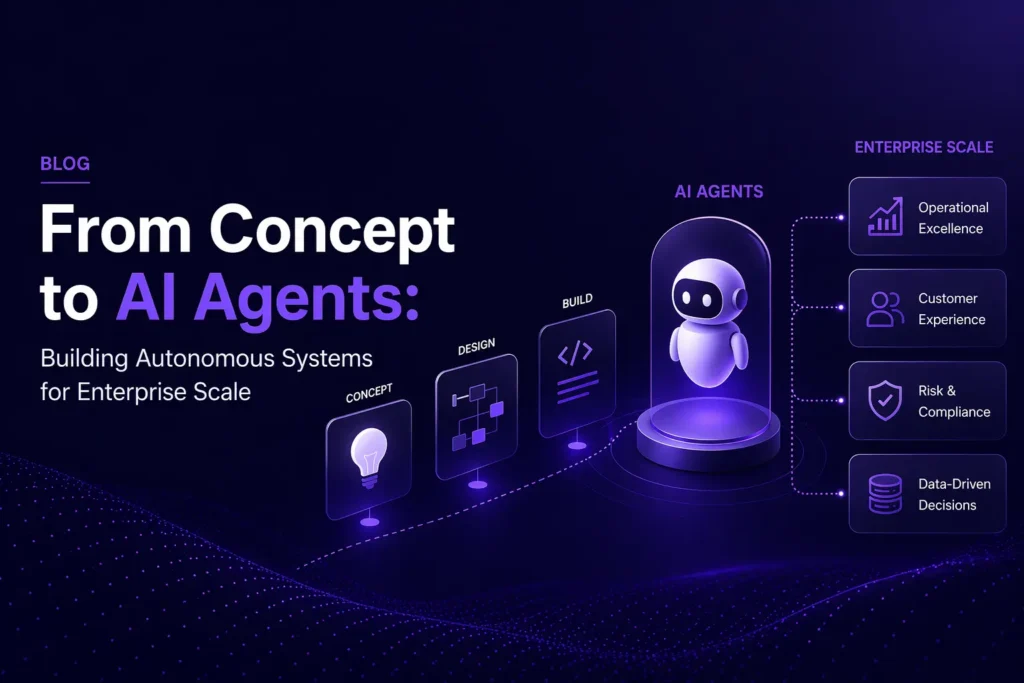
Enterprise AI is not a feature to be added to an existing application. It is a layered system built from data pipelines that ingest and route information reliably, models that reason and generate, application layers that expose capabilities via APIs, and feedback loops that enable continuous improvement.
The Four Layers Every Enterprise AI System Must Have
Architecture that is modular and API-first allows each layer to scale independently, lets teams consume AI through standardized contracts, and makes it possible to swap models or update pipelines without systemic risk. Enterprises that skip this step find themselves constrained precisely when they need to grow. Organizations implementing enterprise AI solutions are increasingly prioritizing modular architectures, scalable integrations, and governed AI workflows to support long-term operational growth and adaptability.
Why Modular, API-First Design Is Non-Negotiable at Enterprise Scale
A modular architecture decouples components so that a change in one layer (a new model, an updated pipeline, a new data source) does not cascade into a full system rebuild. API-first design standardizes how every layer communicates, enabling teams across the organization to build on shared capabilities rather than duplicating effort.
Poor architecture does not just slow scale. It prevents it entirely.
AI Agents: When Your Systems Start Acting, Not Just Answering
An AI agent is not a chatbot. It is a system that perceives its environment, reasons about a goal, and takes action autonomously and continuously without waiting for a human prompt. Enterprise AI is entering a phase transition: from tools that assist human decision-making to systems that execute on behalf of the enterprise. Wizr.ai has already made this transition real, with production-ready agents running inside live enterprise workflows across three high-impact domains. Organizations exploring enterprise AI agent platforms are increasingly focusing on autonomous workflows, governed AI operations, and scalable enterprise automation to move beyond traditional chatbot-based systems.
Wizr AI’s Production-Deployed Agents: Already Running, Already Delivering
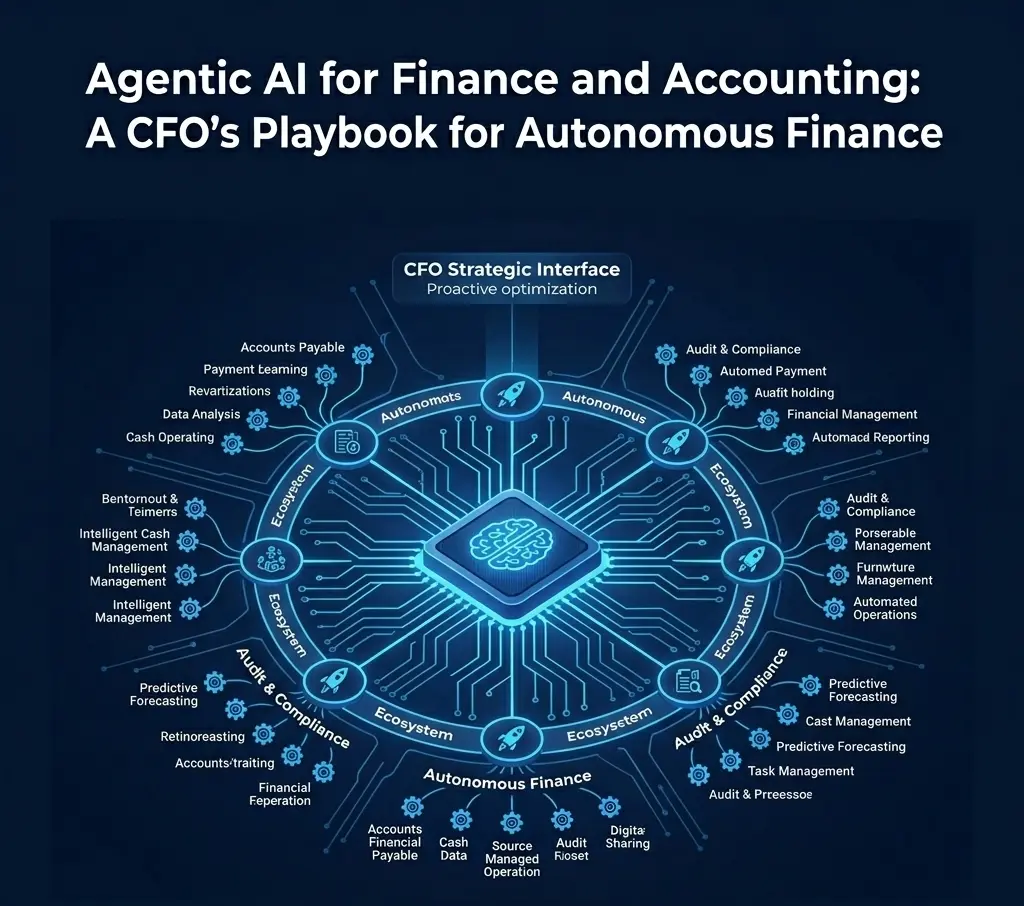
Finance and Accounting: Closing the Books Without the Bottlenecks
Agents handling invoice processing, reconciliation, compliance checks, and approval routing that significantly reduce manual effort across month-end close cycles and audit preparation.
Outcome: Faster close cycles, fewer exceptions, full compliance traceability.
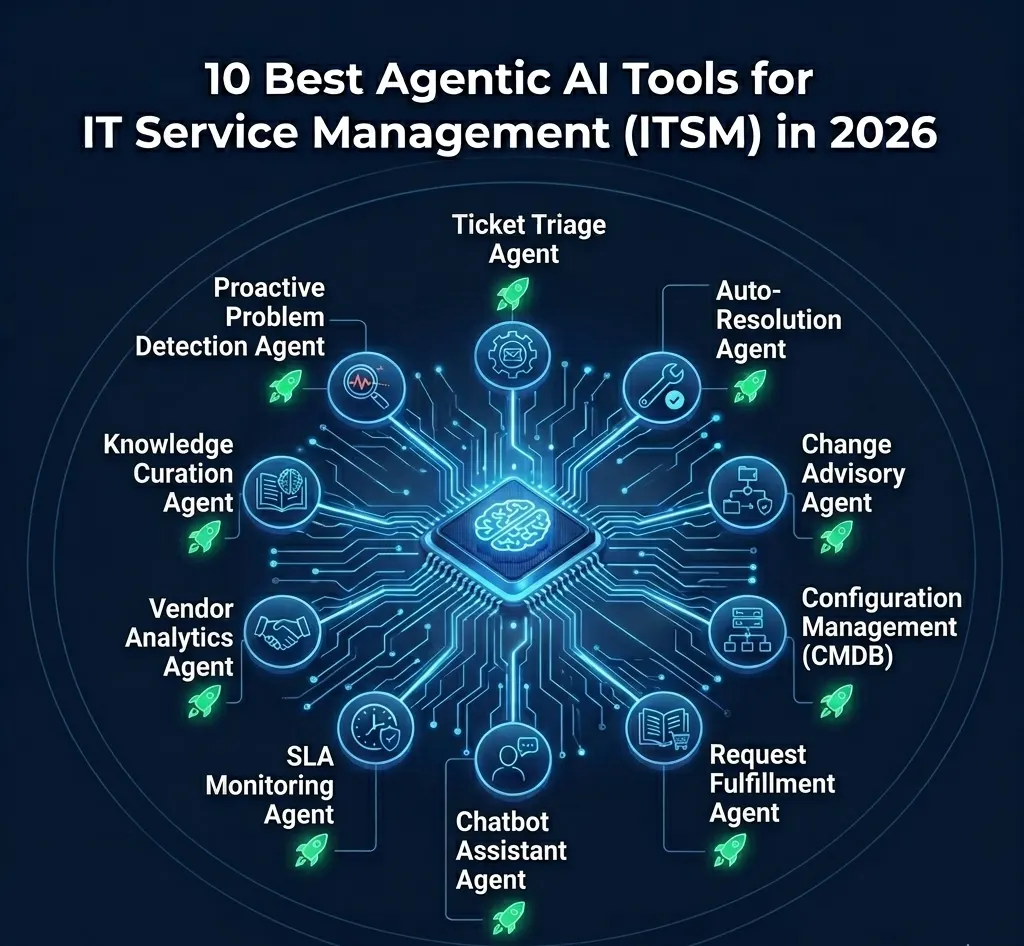
IT Support Management: From Ticket Backlog to Autonomous Resolution
Agents that classify tickets, surface relevant resolutions, and autonomously resolve common issues, materially reducing mean time to resolution and deflecting volume from human queues.
Outcome: Reduced MTTR, lower ticket volume on human queues, higher SLA adherence.
Customer Support: Faster Responses, Smarter Escalations, Better Experiences
Agents that handle standard queries across channels, triage complex cases, and hand off to human agents with full context, cutting response times while redirecting human effort to interactions that actually require judgment.
Outcome: Lower average handle time, improved CSAT, reduced escalation rate.
Agents don’t just respond. They act. In production, that distinction is everything.
Orchestration: When Every Agent Knows Its Role in the Bigger Play
A single agent solving one problem is useful. A coordinated network of agents executing across interconnected workflows is transformative.
Real-Time Decision Loops That Replace Manual Human Handoffs
Orchestration is the discipline of coordinating multiple agents, models, and enterprise systems (CRM, ERP, ITSM) to execute multi-step workflows reliably and at speed. When an IT agent identifies a billing issue and passes structured context to a finance agent without human handoff, or when a customer support agent detects a churn risk and simultaneously updates the CRM and alerts account management, that is orchestration delivering real-time business outcomes, not just automation.
Organizations implementing AI-driven SDLC to accelerate delivery are increasingly focusing on orchestrated AI workflows, autonomous agents, and real-time enterprise automation to improve operational efficiency and decision-making at scale.
Orchestrated AI doesn’t just automate tasks. It drives business outcomes end-to-end.
Governance: The Invisible Infrastructure That Makes AI Trustworthy
Ungoverned AI creates as many risks as it resolves. Enterprise AI governance is not a compliance checkbox. It is a foundational engineering discipline that must be built in from inception.
Security, Compliance, and Explainability as Engineering Constraints
At the security layer, this means role-based access controls for agents, data flowing through the same governance pipelines as human-accessed systems, and full audit trails of agent decisions. At the compliance layer, it means designing to GDPR, SOC 2, and sector-specific requirements as constraints, not afterthoughts. Explainability (the ability to communicate why an AI system made a decision) is what builds internal trust over time.
Human-in-the-Loop: Designing for Oversight Without Killing Autonomy
The goal is not to make every decision subject to human review, because that defeats the purpose of autonomous AI. The goal is to define clearly which decisions require human oversight, enforce those thresholds automatically, and maintain a full audit trail of when and why a human was engaged.
AI without governance cannot scale. In regulated industries, it cannot operate at all.
Scale: From One Successful Pilot to Twenty Production Systems
The most common AI failure mode is not technical. It is the inability to move from a contained pilot to an operationally embedded, organization-wide capability. Scaling AI requires reusable system components configurable across use cases, standardized data contracts and model interfaces, and continuous learning mechanisms that improve performance with usage.
How Wizr Turns Reusability Into Compounding Enterprise Advantage
Because foundational infrastructure (security, orchestration, integration, governance) is pre-built, new agents can be deployed rapidly. Workflows built for finance share infrastructure with IT support. Patterns from customer support adapt to procurement or HR. This reusability is how AI adoption becomes a compounding advantage rather than a perpetual project.
AI must be embedded into operations, not managed as a separate initiative, to deliver compounding value.
How Wizr AI Helps Enterprises Build and Scale AI Systems
Wizr AI is a strategic AI engineering partner, not a software vendor. The distinction matters: a vendor delivers a product; a partner takes accountability for outcomes within the architectural, operational, and compliance realities of complex organizations.
Production-Ready Agents. Rapid Deployment. Measurable Impact.
Invoice processing, reconciliation, compliance workflows, and approval automation, all operating within strict financial controls.
Ticket classification, routing, and autonomous resolution calibrated to complexity and risk tolerance.
Omnichannel query automation, case triage, and enriched escalation handoffs that improve both efficiency and experience.
These agents integrate directly with existing CRM, ERP, and ITSM systems. Time-to-value is measured in weeks. Every deployment is underpinned by secure, governed, and explainable AI: the kind that legal, compliance, and risk teams can stand behind, not just technology leadership. Organizations looking to accelerate enterprise AI adoption can contact Wizr AI to explore secure, production-ready AI implementations tailored to enterprise workflows and governance requirements.
The AI-Native Enterprise Is Being Built Right Now. Are You Building It?
The window for treating AI as a discretionary innovation investment is closing. What separates the next tier of competitive organizations is not the sophistication of their models. It is the depth of their AI engineering. System thinking, not MVP thinking, is what enables an enterprise to move from one successful deployment to twenty. Governance is what allows scale without accumulating risk. And agents (autonomous, orchestrated, production-hardened) are what turn intelligence into execution. The AI-native enterprise is being built right now. The only meaningful question is whether your organization is building it, or watching competitors do so.
Organizations exploring AI solutions for pharma companies are increasingly investing in scalable AI engineering, workflow orchestration, governance, and autonomous enterprise agents to build long-term competitive advantage and operational resilience.
About Wizr AI
Wizr AI helps enterprises build autonomous enterprises and accelerate product and software engineering with practical, production-ready AI. We help organizations automate business workflows, modernize legacy applications and digital platforms, and build intelligent AI solutions.
Our core services include Enterprise AI Services, AI-Powered Engineering & Legacy Modernization, AI Product Engineering, and AI Governance. We also leverage AI Assembly capabilities, including the Agentic AI Framework, Agentic Workflows, Security, and Integrations.
Through our AI solutions, including AI Agents, Pharma & Life Sciences AI, Oracle AI, and Salesforce AI, we help enterprises apply AI across business and technology needs.
See how we can help your enterprise move faster with AI. 👉 Talk to an AI Expert.


![Agentic AI vs AI Agents: Key Differences Every CIO Must Know [2025 Guide]](https://wizr.ai/wp-content/uploads/2025/07/Agentic-AI-vs-AI-Agents.webp)
![Agentic AI vs Traditional Automation: Why Enterprises Shift for Better CX [2025]](https://wizr.ai/wp-content/uploads/2025/06/Agentic-AI-vs-Traditional-Automation.webp)


![11 Real-World AI Agents Examples + Use Cases for Enterprises [2025]](https://wizr.ai/wp-content/uploads/2025/05/AI-Agents-Examples-Use-Cases.webp)