Artificial intelligence (AI) continues to transform industries, with Generative AI and Large Language Models (LLMs) standing at the forefront of this revolution, each redefining how technology interacts with creativity and language. These terms, though often conflated, address different needs and applications within the AI ecosystem.
Understanding Generative AI vs Large Language Models is essential for businesses, developers, and researchers aiming to harness their capabilities effectively.
A recent report shows that the global AI market is expected to reach $1.8 trillion by 2030, growing at a CAGR of 37.3% (Source).
Meanwhile, the Generative AI market alone is projected to hit $110.8 billion by 2030 (Source).
This guide explores their distinctions, applications, and future trends, providing an in-depth LLM vs Generative AI comparison to help you make informed decisions.
Confused about how generative AI differs from LLMs? You’re not alone. While both are powerful, they serve distinct roles – one creates content across formats, the other excels at understanding and generating text.
This guide breaks down their differences, use cases, and how to choose the right one for your business goals in 2026.
If you’re comparing Generative AI vs Large Language Models for CX, content, or automation – this post is your cheat sheet. Read the full post to get clarity and make smarter AI decisions.
What is Generative AI?
Generative AI refers to AI systems capable of creating new content, including text, images, music, and videos. Unlike traditional AI models that primarily focus on recognizing patterns to make decisions, Generative AI extends its functionality by simulating human-like creativity. It operates through advanced algorithms, such as Generative Adversarial Networks (GANs) and Variational Autoencoders (VAEs), to produce outputs that are both innovative and contextually relevant. Its ability to craft entirely novel data has positioned Generative AI in customer support and Large Language Models as transformative tools across multiple industries. These systems analyze patterns in existing datasets to produce unique outputs that mimic human creativity.
In 2024, Gartner reported that 70% of enterprises will use generative AI for customer-facing functions by 2025.
The global generative AI market is projected to reach $66.6 billion by 2030, driven by adoption in support, design, and content generation. With tools like ChatGPT and DALL·E, businesses are accelerating content workflows while reducing manual workload.

Key Features of Generative AI:
- Diverse Content Generation: Generative AI can create outputs in multiple formats, including high-resolution images, engaging video content, lifelike audio, and nuanced textual responses. For instance, tools like DALL·E generate artwork that rivals human creativity, while others design captivating video game assets or movie animations. According to a recent report, over 60% of artists and designers believe that Generative AI complements their creative process.
- Pattern Recognition: By analyzing vast datasets, Generative AI discerns intricate patterns, such as artistic styles or writing nuances. This enables it to replicate or build upon these patterns to generate contextually relevant and innovative outputs, such as mimicking famous painters’ techniques or crafting poetry.
- Adaptive Learning: Generative AI adapts to new input or feedback, improving the quality and precision of its outputs over time. For example, AI in e-commerce may refine product recommendations based on customer preferences or dynamically adjust ad creatives for better performance.
- Creative Assistance: It enhances human creativity by generating multiple versions or ideas from a simple prompt. A marketing team might use it to produce slogan variations, while architects could explore diverse design layouts within seconds.
- Scalability: Generative AI solutions are scalable across industries, supporting individual creators and large enterprises alike. A single model can power tasks as varied as designing personalized home interiors or creating tailored advertising campaigns for global brands.
Applications of Generative AI:
- Art and Design: Generative AI revolutionizes creative workflows by producing original artworks or modifying existing ones. For example, tools like Adobe Firefly allow designers to customize visuals rapidly, while others can render 3D models for industrial design.
- Entertainment: Generative AI is reshaping media production by writing scripts, generating storyboards, and creating animated characters. Virtual concerts featuring AI-generated music or films with AI-designed scenes are already becoming a reality. This highlights the intersection of Generative AI and Large Language Models (LLMs) in creative fields.
- Healthcare: Generative AI aids in the synthesis of realistic but anonymized medical datasets, assisting in research while maintaining privacy. It also supports drug discovery by modeling molecular structures and predicting potential outcomes, illustrating the utility of LLM models in data synthesis.
- Marketing: By crafting highly targeted advertisements and personalized campaigns, Generative AI optimizes engagement. Marketers use it to design banners, write ad copies, and analyze customer sentiment for more effective communication. Businesses using Generative AI in marketing have reported a 30% increase in ROI, demonstrating the efficiency of Large Language Models in enhancing business performance (Source).
- Gaming: Generative AI generates expansive, interactive game worlds with minimal human intervention. Developers use it to design procedurally generated levels, create realistic character animations, and even write branching narratives that adapt to player choices, all of which leverage LLMs for text generation. For more insights on how generative AI accelerates game and software development, explore its practical applications in enterprises.
- Education: Generative AI tailors educational experiences by creating interactive lesson plans, quizzes, and simulations. For instance, AI-driven platforms develop language learning exercises personalized to the pace and proficiency of each student.
What are Large Language Models (LLMs)?
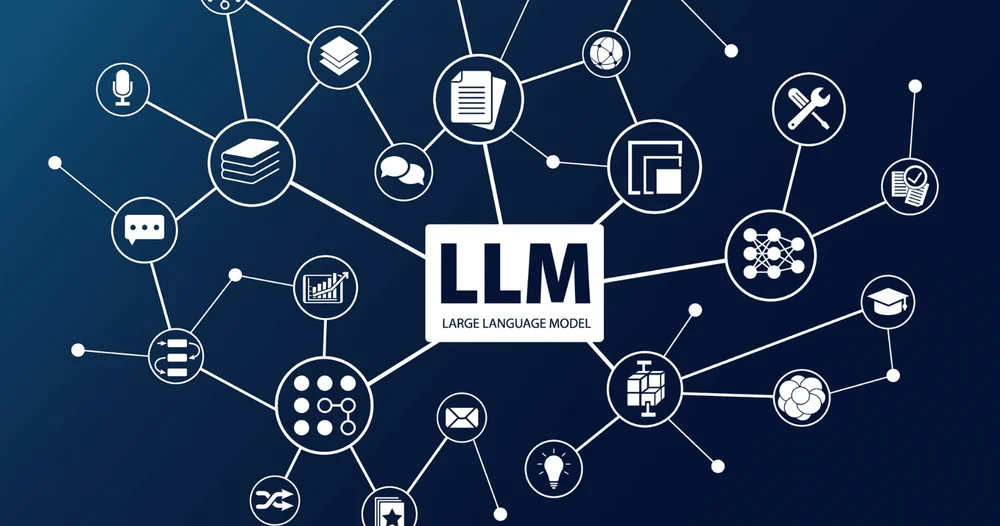
Large Language Models (LLMs) are advanced AI systems trained on massive datasets to understand, interpret, and generate human-like language. They are foundational to generative AI, powering applications like chatbots, virtual assistants, and content automation tools. LLMs enable machines to engage in meaningful language-based tasks with speed and contextual understanding.
Large Language Models (LLMs) represent a groundbreaking advancement in natural language processing, designed to comprehend, interpret, and generate human-like text. Built on sophisticated architectures such as transformers, these models analyze extensive datasets, ranging from books to online articles, to grasp the intricacies of language. Their ability to process vast amounts of information enables them to perform tasks that require both accuracy and contextual understanding, making LLM embeddings crucial for AI innovation.
According to Stanford’s Foundation Model Index, LLMs are now central to over 70% of new AI product development efforts. ChatGPT (based on OpenAI’s GPT models) reached 100 million users in just 2 months – making it the fastest-growing consumer application in history. LLMs are increasingly embedded in customer service, healthcare, and enterprise software for their ability to scale personalized communication and insights.
Key Features of Large Language Models (LLMs):
- Language Understanding: LLMs excel in grasping linguistic nuances, including idioms, metaphors, and contextual references. This enables them to produce text that is both grammatically accurate and culturally relevant, enhancing their ability to engage with diverse audiences.
- Scalability: With billions, and sometimes trillions, of parameters, LLMs can manage complex tasks such as multilingual translation, intricate query handling, and extended text generation without losing coherence.
- Versatility: Beyond traditional applications like summarization and translation, LLMs power sentiment analysis, creative writing, and even code generation, demonstrating their flexibility across multiple domains.
- Contextual Awareness: Capable of maintaining context over extended dialogues, LLMs ensure that responses remain relevant, logical, and aligned with prior interactions, making them ideal for chatbots and conversational agents, which rely heavily on LLM models for text generation.
- Customization: LLMs can be fine-tuned for industry-specific applications, such as legal document analysis, medical diagnosis assistance, or financial forecasting, ensuring precision and relevance.
Applications of Large Language Models (LLMs):
- Customer Service: LLMs enhance customer experiences by powering advanced chatbots capable of resolving queries, troubleshooting, and offering tailored recommendations with human-like interactions. AI-powered chatbots are expected to save businesses $11 billion annually by 2025. (Source)
- Content Creation: Writers and marketers leverage LLMs to produce high-quality articles, reports, and marketing materials at scale, with capabilities for style adaptation and tone customization. The application of Large Language Models vs Generative AI is becoming increasingly valuable in the content creation industry.
- Education: LLMs revolutionize learning by generating adaptive lesson plans, answering student queries, and even simulating one-on-one tutoring for enhanced educational outcomes. This shows how Generative AI and Large Language Models can make a significant impact in educational applications, improving personalized learning.
- Healthcare: By drafting comprehensive medical reports, summarizing patient histories, and aiding in diagnostics, LLMs reduce administrative burdens and enhance clinical efficiency. This highlights the benefits of Large Language Models in streamlining healthcare operations and assisting with complex tasks.
- Legal: LLMs streamline legal workflows by drafting contracts, summarizing case laws, and reviewing lengthy legal documents for accuracy and compliance. This demonstrates the growing importance of LLM models for text generation in the legal industry, improving efficiency and reducing errors.
- Research: Researchers utilize LLMs for generating literature reviews, summarizing complex studies, and even formulating hypotheses, accelerating the pace of scientific discovery. The use of LLMs in research shows how these models can enhance data processing and knowledge generation.
Generative AI vs LLMs: Key Differences Explained
While Generative AI and Large Language Models (LLMs) overlap in certain areas, their core purposes and functionalities differ significantly. Here’s a comparative analysis of Generative AI vs LLM:
| Feature | Generative AI | Large Language Models |
| Primary Function | Generating diverse content types | Text understanding and generation |
| Core Technology | GANs, diffusion models | Transformer architectures |
| Scope | Multimodal (text, images, video) | Text-focused |
| Training Data | Diverse datasets including text, images, and audio | Predominantly text corpora |
| Applications | Art, gaming, marketing | Language-centric tasks |
| Complexity | Higher for multimodal tasks | High for extensive text tasks |
| Examples | Stable Diffusion, Runway ML | GPT-4, Claude 3 |
Generative AI vs LLMs: Top Use Cases and Applications in 2026
Generative AI Use Cases:
- Fashion Design: Generative AI enables designers to explore bold new ideas, creating digital fashion prototypes that push the boundaries of creativity and practicality.
- Architecture: AI-driven tools assist architects by generating detailed structural models, floor plans, and visualizations, allowing them to experiment with innovative designs efficiently.
- Product Design: From consumer electronics to household appliances, Generative AI streamlines prototyping by producing multiple design iterations based on specified requirements.
- Gaming: Generative AI enhances gaming experiences by creating dynamic storylines, procedurally generated levels, and lifelike character animations.
- Film Production: AI contributes to automating tasks like visual effects creation, enhancing scenes, and developing unique cinematographic styles.
- Healthcare: By synthesizing large volumes of anonymized patient data, Generative AI accelerates research on rare diseases and personalizes treatment options.
- E-Commerce: AI generates virtual try-ons and personalized product recommendations, improving online shopping experiences for consumers.
LLM Use Cases:
- Customer Support: Advanced chatbots powered by LLMs provide instant, personalized assistance, reducing wait times and increasing customer satisfaction.
- Education: AI tutors generate adaptive content tailored to student progress, while answering queries and simulating exam environments for better preparation.
- Healthcare: LLMs draft concise and accurate medical documentation, reducing the workload for healthcare professionals and enhancing patient care.
- Legal: Automated legal assistants help analyze contracts, summarize case laws, and identify potential legal risks with impressive speed and accuracy.
- Business Intelligence: LLMs distill actionable insights from vast datasets, enabling leaders to make data-driven decisions in real time.
- Journalism: From creating concise news summaries to assisting with investigative pieces, LLMs support journalists by accelerating content production.
- Software Development: Developers use LLMs for generating clean code, automating debugging processes, and drafting technical documentation effortlessly.
Advantages and Limitations of Generative AI vs LLMs
Advantages of Generative AI:
- Content Creation with Generative AI: Generative AI can assist in producing creative content, such as articles, artwork, and music, reducing the time and effort needed for creation.
- Personalization in Generative AI: It can generate personalized content and recommendations based on individual preferences, enhancing user experiences.
- Automation with Generative AI: Generative AI can automate repetitive tasks such as report generation, improving efficiency and productivity.
- Problem-Solving with Generative AI: It can generate innovative solutions to complex problems by processing large datasets and generating novel ideas.
- Cost Reduction through Generative AI: By automating content generation and other tasks, generative AI can help reduce costs in industries like marketing, design, and software development.
Limitations of Generative AI:
- Quality Control in Generative AI: The generated content may lack quality or accuracy and may require human intervention to ensure it meets standards.
- Ethical Concerns in Generative AI: Generative AI can produce biased, harmful, or misleading content, raising ethical and social concerns.
- Dependency on Generative AI: Over-reliance on Generative AI can lead to a reduction in human creativity and critical thinking.
- Data Dependency of Generative AI: The performance of generative AI models heavily relies on the quality and quantity of the data they are trained on, which can lead to incomplete or inaccurate outputs.
- Intellectual Property Issues in Generative AI: AI-generated content may raise legal concerns over ownership, copyright, and intellectual property rights.
Advantages of Large Language Models (LLMs):
- Natural Language Understanding in LLMs: LLMs excel in processing and understanding human language, allowing for improved interactions with users.
- Language Translation with LLMs: LLMs can perform accurate translations between multiple languages, breaking down communication barriers.
- Contextual Relevance in LLMs: LLMs can generate contextually relevant responses, enabling effective communication in various applications like customer service and content generation.
- Scalability of LLMs: LLMs can handle large-scale tasks, processing massive amounts of text data for analysis or response generation.
- Customization of LLMs: With fine-tuning, LLMs can be adapted to specific industries or domains for more specialized applications.
Limitations of Large Language Models (LLMs):
- Context Limitation in LLMs: LLMs may struggle with long-term contextual understanding, often losing track of complex conversations or narratives.
- Bias and Inaccuracy in LLMs: LLMs can inherit biases from the data they were trained on, leading to biased or inaccurate outputs.
- Resource Intensive Nature of LLMs: Training and maintaining LLMs require significant computational resources, making them expensive to deploy and scale.
- Lack of Common Sense in LLMs: LLMs lack true common sense and may provide responses that sound plausible but are incorrect or nonsensical.
- Dependence on Data for LLMs: The performance of LLMs is limited by the quality and diversity of the training data, meaning they might struggle in domains with insufficient or biased data.
Examples of Leading Generative AI and LLM Models
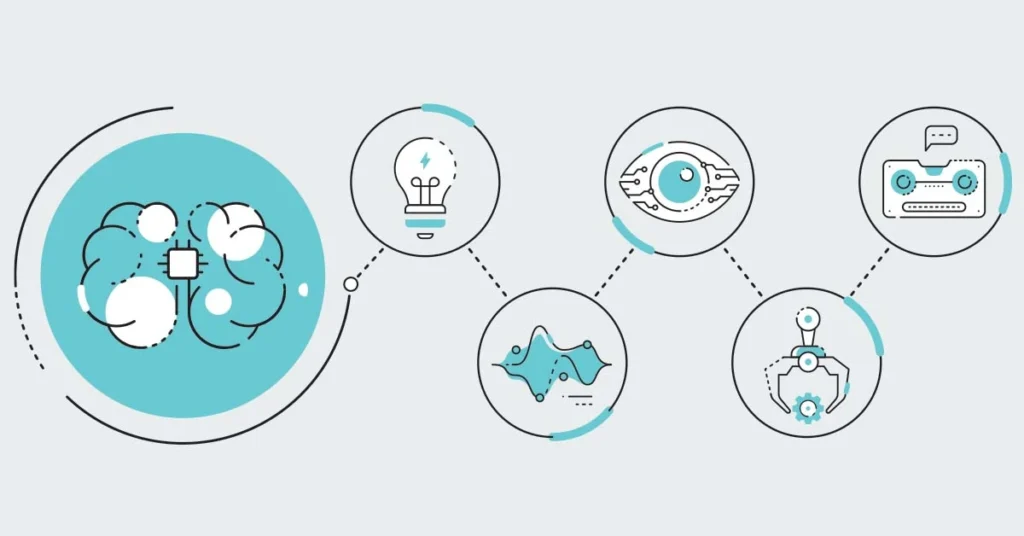
Examples of the Best Generative AI Models:
- DALL·E: DALL·E is a leader in Generative AI, known for its ability to generate stunning visuals from textual prompts. This tool revolutionizes the creation of images, providing artists and marketers with innovative ways to express their creativity.
- Runway ML: Runway ML is a widely used platform in Generative AI for video editing and content creation. It simplifies complex workflows, enabling users to produce professional-grade videos efficiently.
- MidJourney: MidJourney is renowned for its Generative AI capabilities in crafting surreal and artistic imagery. It’s highly favored by digital artists seeking unique and innovative styles.
- Artbreeder: Artbreeder uses Generative AI to blend various features, such as faces, landscapes, and abstract art. It allows artists to create novel visuals by merging diverse elements, showcasing the potential of Generative AI in digital art.
- DeepArt: DeepArt utilizes deep neural networks to turn photos into artwork, imitating the styles of famous artists. It highlights the power of Generative AI for transforming personal photos into pieces of art.
Examples of the Best Large Language Models:
- GPT-4: GPT-4 is one of the best LLM models, recognized for its conversational capabilities. It powers chatbots, virtual assistants, and content generation tools with remarkable fluency and coherence, showcasing its expertise in natural language understanding and generation.
- Claude 3: Claude 3 is a top choice among Large Language Models, praised for its ethical framework. It offers transparency and accuracy, making it ideal for industries where accountability is key.
- BERT: BERT, a key Large Language Model, is widely used in search engines and ai text classification tasks. It improves the accuracy and relevance of search results, making it a powerful tool for enhancing user experience.
- T5 (Text-to-Text Transfer Transformer): T5, developed by Google, reframes all NLP tasks as text-to-text problems. This enables it to excel in diverse applications such as translation, summarization, and question answering, positioning it as one of the best large language models for text-based tasks.
- XLNet: XLNet builds on the BERT model, enhancing the performance of LLM models with improved autoregressive pretraining. This advancement makes XLNet a powerful LLM for tasks requiring advanced natural language understanding and generation.
Future Trends in Generative AI and LLMs: What to Expect in 2026
The future of AI is poised to be defined by integration and innovation. Multimodal AI systems, capable of processing and generating text, images, and audio simultaneously, are expected to dominate the market. These systems will offer unparalleled versatility, bridging gaps between creative and analytical tasks. Sustainability will also be a key focus, with developers striving to reduce the environmental impact of training large-scale models through energy-efficient algorithms and hardware.
Ethics will remain a central theme, as concerns about bias and misinformation continue to grow. Enhanced governance frameworks and transparent AI systems will be prioritized to ensure fairness and accountability. Additionally, personalization will take center stage, with models increasingly tailored to individual user preferences and industry-specific needs.
LLMs vs Generative AI: How to Choose the Right Model
Selecting between Generative AI and LLMs requires careful consideration of your objectives and constraints. If your goal is to create diverse and innovative content, such as videos, images, or music, Generative AI is the ideal choice. Its capabilities are particularly suited for industries like marketing, design, and entertainment. On the other hand, if your needs revolve around language-centric tasks, such as summarization, translation, or conversational AI, LLM embeddings in AI are the better option. They excel in understanding and generating text with high accuracy.
Budget and computational resources also play a critical role. Generative AI models, especially those used for high-resolution image or video generation, can be resource-intensive. Conversely, while LLMs also demand significant computational power, they can be optimized for specific tasks to reduce costs. Ethical considerations should not be overlooked; businesses should prioritize models that align with their values and comply with industry standards to ensure responsible AI usage.
Conclusion
The debate between Generative AI vs Large Language Models highlights the unique capabilities of each technology. Generative AI is perfect for content generation, while LLMs offer exceptional performance in understanding and generating text. Understanding the difference between Generative AI and Large Language Models allows organizations to choose the right technology based on their specific needs.
As AI continues to evolve, the synergy between Generative AI and LLMs promises a future filled with innovative solutions that combine creativity and language expertise to achieve transformative outcomes. This advancement also extends into areas such as software development, where Generative AI can revolutionize the bug-fixing process, enabling faster and more efficient solutions, thus complementing the capabilities of LLMs in enhancing overall productivity.
FAQs
1. What is the difference between Generative AI and Large Language Models (LLMs)?
Generative AI vs Large Language Models comes down to their scope and use cases. Generative AI refers to a broader category of AI that can generate content such as text, images, audio, and more. Large Language Models (LLMs) are a subset of generative AI focused specifically on understanding and generating human-like text for tasks like translation, summarization, and conversational AI. Understanding the difference helps enterprises choose the right approach for building AI agents, assistants, and workflows.
2. Are Large Language Models considered Generative AI?
Yes, Large Language Models are a type of Generative AI focused on text generation and language understanding. While generative AI includes multiple modalities (text, image, audio), LLMs specialize in language-driven tasks. Wizr AI integrates LLMs within its platform and services to power AI agents, AI assistants, and agentic workflows for enterprise automation.
3. What are the best Large Language Models available in 2025?
Some of the leading LLMs in 2025 include models like GPT-4, Claude 3, and BERT, which support text generation, summarization, and conversational AI. Enterprises often use a multi-model approach depending on use case, performance, and governance needs. Wizr AI enables enterprises to leverage and integrate multiple LLMs within its platform to build scalable, secure, and production-ready AI solutions.
4. How do Generative AI and Large Language Models complement each other?
Generative AI and LLMs complement each other as LLMs serve as the foundation for language-based generation within broader generative AI systems. While LLMs handle text understanding, reasoning, and generation, generative AI expands this capability across modalities and enterprise use cases. Together, they enable AI agents, assistants, and agentic workflows that automate complex business processes. Wizr AI brings these together to power enterprise-grade automation and intelligent decision-making.
5. What are the benefits of using Large Language Models for text generation?
LLLMs enhance text-based applications by:
- Understanding complex language and enterprise context
- Improving accuracy and coherence in automated responses
- Enabling summarization, knowledge extraction, and conversational automation
These capabilities are critical for enterprise use cases such as customer support, IT service management, and finance workflows. Wizr AI leverages LLMs within its platform and services to automate workflows, improve resolution times, and generate insights from enterprise data.
6. Why is it important to understand Generative AI vs LLM?
Understanding Generative AI vs LLM helps enterprises make the right architectural and investment decisions when building AI solutions. It ensures the correct combination of models, workflows, and integrations for specific business outcomes. Wizr AI helps organizations move from experimentation to production by combining LLMs, generative AI, and agentic workflows within a secure, enterprise-ready platform along with implementation and optimization services.
About Wizr AI
Wizr AI helps enterprises build autonomous operations and accelerate software delivery with practical, production-ready AI. Our secure, modular platform enables teams to build, govern, and scale AI agents and intelligent workflows across Customer Support, IT Support Management, and Finance & Accounting. Through AI-powered engineering services, Wizr also helps organizations accelerate software development and modernization. With pre-built and configurable AI agents, along with enterprise-grade security and integrations, Wizr makes it easy to move from pilot to production with real business impact.
See how Wizr AI can help your teams move faster. 👉 Get in touch.


![Agentic AI vs AI Agents: Key Differences Every CIO Must Know [2025 Guide]](https://wizr.ai/wp-content/uploads/2025/07/Agentic-AI-vs-AI-Agents.webp)
![Agentic AI vs Traditional Automation: Why Enterprises Shift for Better CX [2025]](https://wizr.ai/wp-content/uploads/2025/06/Agentic-AI-vs-Traditional-Automation.webp)


![11 Real-World AI Agents Examples + Use Cases for Enterprises [2025]](https://wizr.ai/wp-content/uploads/2025/05/AI-Agents-Examples-Use-Cases.webp)